May 25, 2016

So I called up the captain, Please bring me my wine (Napa & Sonoma)

I'd never been much of a California wine fan. Once I discovered the Marlborough region of New Zealand and Western Australia's Margaret River early in my wine-drinking career, there never seemed that much point in venturing to other parts of the New World.

I expected good wine in Napa and Sonoma, however. I hadn't anticipated such appealing valley landscapes and towns.

Half way through our California road trip in February, we returned to San Francisco to drop off family members heading back to the UK. It was late afternoon by the time we crossed the city heading for the Golden Gate Bridge, our preferred route north to St Helena in the Napa Valley. The light was fading fast and the traffic was heavy yet fast-moving on US 101. It was not a relaxing drive and it took longer than the one-and-a-half hours we'd anticipated.
As soon as we'd checked in at Napa Farmhouse Inn on the St Helena Highway South, we dashed up the road to make our 8 pm dinner booking at the Goose & Gander on Spring Street in St Helena itself. The food was good and a couple of glasses of wine soon banished any leftover stress.

The next morning we awoke in beautiful surroundings. This was week two of our great holiday weather experience; and an early California Spring meant the Valley had blossomed. I am sorry to report, however, that although Napa Farmhouse Inn was a lovely house, built in the 1870s, in pleasant surroundings, it charged far too much for a room without an ensuite or tea-making facilities. The rate included breakfast, and the homemade food was excellent, but there was no choice for a meal for which I would probably never choose frittata containing sausage or a cinnamon muffin and blueberry scone. Not wishing to sound churlish, neither do I want to chat all the while I eat at that time in the morning. And how could I surreptitiously disappear the sausage under the beady eye of the chef?
We drove into St Helena, which is lovely. We had a walk around; a coffee; and picked up wine guides and maps from tourist information.
Napa County is the heart of California's wine industry. Vineyards are the most concentrated here; there are more than 400 wineries across 17 AVAs (American Viticultural Areas, or appellations); and they produce the greatest number and variety of fine wines in North America. The region stretches more than 50 kilometres from San Francisco Bay to the foothills of Mount St Helena. The climate is cool nearer the coast, where it is often foggy; and warmer on the Valley floor further north. Altitude and aspect of slope determine subtle nuances in the character of the wines. Volcanic mountains have produced well-drained gravelly soils: there are 33 soil types across the County.

Goose & Gander's sommelier had advised us about how best to sample Napa wines in a day. First up was Duckhorn, a truly lovely place, even if the tasting notes were too sophisticated for our palettes and the wines way beyond our purse. You have to make an appointment for a tour or a tasting, which costs US$30 a head. We tried a Chardonnay, two Merlots and two Cabernets, and declared the Three Palms Merlot the best of the bunch.
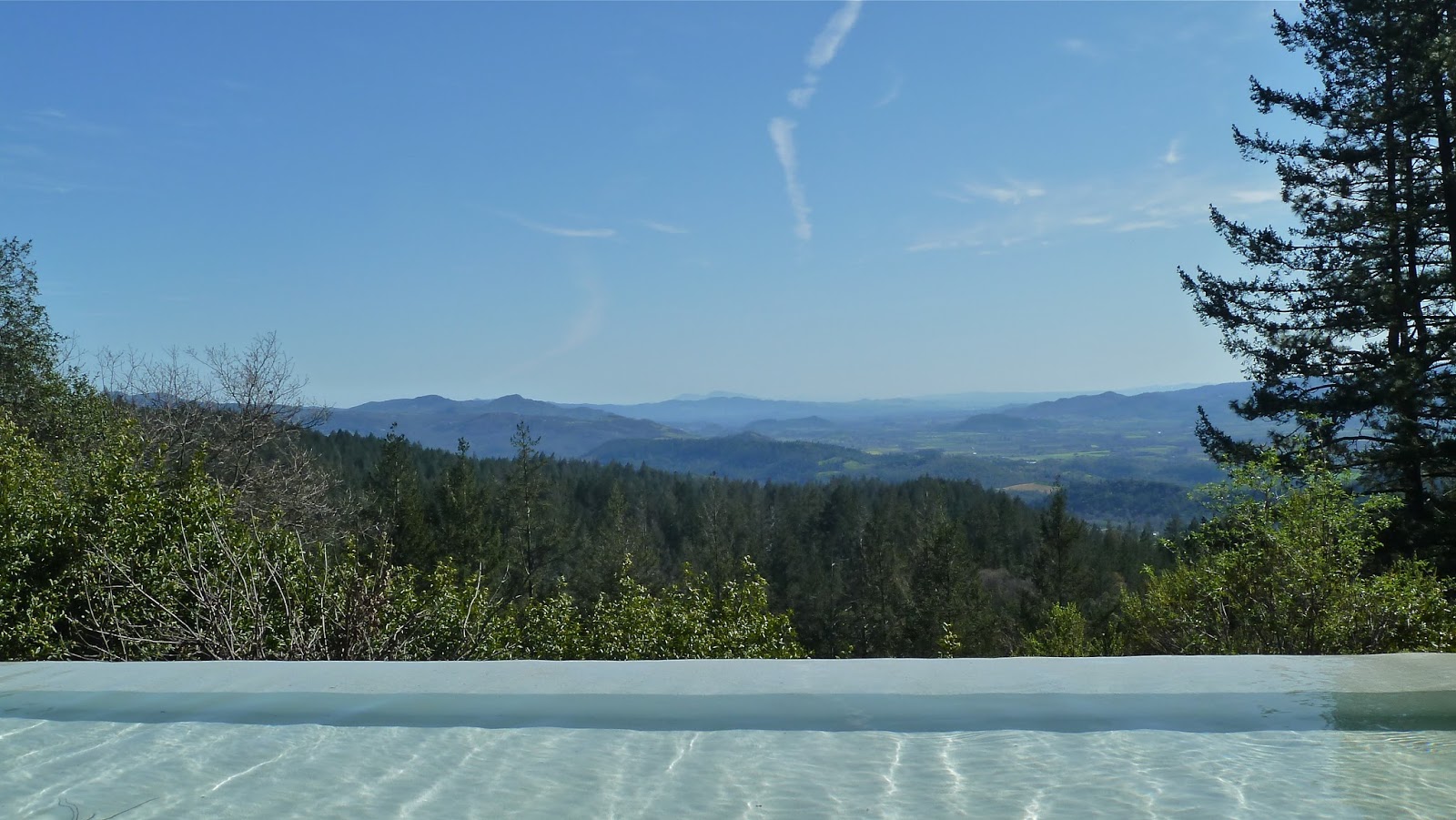
Duckhorn was in the Valley; our next choice was cool Cade Estate on the slopes of Howell Mountain, 550 metres above the Valley floor. They craft organic wines reflecting the unique mountain terroir of Howell Mountain Appellation. There was no mobile signal once we left the Valley so we were unable to phone ahead. Their tastings were fully booked for that day in any case, but a lady took pity on us and gave us a small glass of an impressive Sauvignon Blanc. She was happy for us to linger, admiring the view and the architecture. I prefer cool, modern designs of wineries to older, more stately buildings.
The lady recommended Cade's related PlumpJack Estate, back down in the Valley in Oakville, where you can walk in, much to our relief. PlumpJack was whacky, with oversized fences. I was able to get my hands on a bottle of Cade Sav Blanc, so all was well.
A cork tree
Napa County's wine industry is highly regulated. The maximum number of wineries has been reached for the infrastructure available. Since 2004, new wineries must make appointments for visitors, and numbers are limited. The tourism bureau and the taxation system between them maintain a tight rein over this lucrative business, even so far as to limit the number of weddings that can be conducted in a winery each year.

Having identified which ones you wish to visit, check whether you need an appointment or you can walk in; whether there is a restaurant, food is served at all, or you can picnic. I would recommend you research and book well before the day of your visit, to avoid disappointment.

From PlumpJack we drove to Calistoga in the north of Napa. We took Petrified Forest Road up and over the hills into the neighbouring valley at Santa Rosa. Rather like in Australia, the road didn't have that name for nothing. Along the way were signs to the only petrified forest in California. Not being quite sure what such a thing was, we had to stop and investigate. The events described in the creation of the forest date from millions of years ago in the Eocene Period. I tell you, these ex-coastal redwoods looked for all the world like wood, but they were hard as iron. We followed a trail map and marvelled at the phenomenon,
We were spending the next two nights in Sonoma town, at An Inn 2 Remember in West Spain Street. Once again, we were staying in a kind of B&B. Our room was small but comfortable; there were no tea-making facilities (this is an important requirement). The centre of town was a stone's throw away. Breakfast was included in this much more reasonably priced accommodation, but it was communal, with everyone served the same thing at the same time. We chickened out – sometimes we're miserable wotnots – preferring to choose exactly what we wanted to eat, without enforced chit-chat, at the Sunflower Caffé in Sonoma Plaza.

The first night we ate dinner at Della Santina's, a traditional Italian. So traditional was it that the same, short, unfamiliar Italian opera track played over and over until we nearly screamed. The stocky Italian waiters seemed unaware of it, the food was unexceptional and, despite being served traditional limoncello lemon liqueur on the house, we hastily took our leave. 

Sonoma town is a great little place. We devoted most of the next morning to wandering round, discovering all sorts: architecture; wide avenues; Redwoods; art; a great bookshop; local inhabitants; shop signs; cool bars; and the best kitchen gadget shop ever.
Not forgetting the wines, of course. Sonoma County lies between Napa and the Pacific Ocean. What it lacks in quality compared with Napa it makes up for in quantity. It has 16 AVAs across six fertile valleys, and produces a huge range of both red and white wines that reflect many different soils, local climatic conditions including fog and ocean breezes, altitude and valley aspect. The precise number of wineries depends on who you talk to and whether or not you include producers who do not have a tasting room, but it may well be in excess of 400.

We had sacrificed half a day's tasting in order to get to know Sonoma town, but that was OK. Our hour in Readers' Books, for instance, was sheer delight. I am still wondering if Virgin's excess baggage charge would have been as high as the cost of shipping our pile of books back home. All I did was ask, 'What are Californians reading at the moment?'

The must-see winery this day was, in fact, in the southern Napa Valley, but closer to Sonoma than where we'd been the previous day. Artesa is an architectural wonder with beautiful views to San Pablo Bay and the surrounding Carneros hills – and the wines are pretty good, too. We bought an Albariño and a Cab Sav. We would have given our right arms for a plate of chorizo, but there was no food on offer because we weren't part of a tour. Those regulations again!
Vista Terrace
We were starving and headed back to our favourite Sunflower Caffé for a quick bite of lunch before the next tasting, of six Pinot Noirs, at Walt, in the centre of Sonoma. We sat in the shade of two enormous Redwoods, tasted some fine reds, and listened to the story of Walt. All seemed right with the world.
That evening we ate dinner at The Girl & the Fig, a French restaurant. I liked the name and I enjoyed the food, but, having seen how green California golf courses were, and knowing Coca Cola are bottling precious water supplies for vast profit, despite the prolonged drought, I was beginning to find this sign a little irksome. 
Flounder
 
We went for a last walk around the Plaza before bed. Early next morning we were headed south again, to Bakersfield, at the southern end of California's Central Valley, and inland 215 kilometres east of Pismo Beach. Why Bakersfield? A convenient overnight stop on our way to Death Valley. A lady in a jewellery shop in Sonoma, having asked us where we were going next, excitedly reached for her phone when we told her. She explained that there was a 'super-bloom' of Spring flowers in Death Valley, a once-in-a-decade phenomenon, and showed us the report and the photos. I had been hoping some flowers might be out early, given the glorious weather we'd been having, but this was beyond my wildest dreams. 


May 20, 2016

Words matter

My supper last night was interrupted by an automatic telephone survey about how I was intending to vote in the upcoming election and how important were certain issues. I don't mind surveys but I do mind careless wording.

I was given a list of topics – jobs, tax, health… and so on. I waited for 'climate change', but it didn't come up; environment did.

When the word 'environment' is used as an umbrella term, what do you think it means? How green is your suburb; how many lovely old Queenslanders on their spacious shady blocks are being replaced by multiple indistinguishable tight-fitting units; how clean is the water in your local creek; when did you last see a koala in South East Queensland; do you live within a kilometre of uncovered coal-trains; have the mangroves on the Bay disappeared for another marina; do you approve of fracking to extract coal seam gas; do you think the proposed Galilee coal mines should be allowed to obliterate remnant vegetation and ecosystems; how do you feel about such large areas of the Great Barrier Reef being bleached to death?

Oh, hang on, the bleaching is a result of the warmer, more acidic ocean, right? And climate change can be mitigated by not exploiting any more fossil fuel resources, and not clearing land of trees.

And then there's the loss of regional biodiversity throughout your state. Is that because of hotter droughts or habitat loss during development? Biodiversity is not a user-friendly word, we environmental activists are taught. People's eyes glaze over when they hear it; they start to think about what they'd like to eat for dinner; and many of them don't know precisely what it means, nor are inclined to find out.

Politicians of whatever colour know that Australia must live up to its international obligations to reduce carbon emissions globally, but at the same time many of them, and probably the majority of the people they represent, believe that action on climate change remains in the too-difficult box. They don't want to reduce their number of gadgets, cars and flights/year. The economy must transition to renewables, ah but some people get headaches from those wind turbines, and solar subsidies mean higher energy bills for everyone; and other myths.

When Aussie pollies list their priorities in slick, sound-bitey slogans, they tend to stick to must-have-otherwise-I'll-never-be-elected policies: the economy, jobs, education and health; the big four. Those politicians must be brave, however, and include the most pressing issue of all, action on climate change. There's no point in having a job in a landscape that's burnt to a frazzle and won't support food crops. Hand in hand with action on climate change goes transition to renewable energy. And specific environmental issues such as conservation of threatened species must be talked about too because everything is interconnected. If you destroy wetlands so you've got more berths for your boats, migratory shorebirds won't visit and there'll be less vegetation to check high tides when sea levels rise. If you cover more hinterland with concrete not only will there be less koala habitat but the impact of flash-flooding during intensifying storms will be more devastating.

If your candidates only list the obvious, ask them about the protection of dwindling water resources and endangered wildlife; how they intend to persuade Australians to reduce their high per capita carbon emissions; and will they make solar panels and insulation compulsory on new builds in the Sunshine State. Put them on the spot; a hot spot. If they waffle on about 'environment', ask them to clarify their position on 'climate change'. The careful choice of words is key to easier important conversations.


May 13, 2016

Queensland the archaic state

It's hard to believe but I have lived in Queensland for more than six years and only realised on Monday that abortion is illegal here. I was profoundly shocked: I felt peculiar, as if I'd suddenly been transported to a third-world state.

There was a protracted discussion in the UK decades ago about the viability of a foetus, and the stage of a pregnancy beyond which only a massive risk of death to the mother meant abortion was an option. The private member's bill introduced to the Queensland Parliament this week by Independent MP Rob Pyne still requires those details to be ironed out during debate on the floor of the house. At this stage Mr Pyne seeks simply to update a law from 1899 that criminalises abortion: 'What a woman decides to do with her body, in consultation with her doctor, does not belong in the criminal code.' Quite.

Recently, a 12-year-old girl had to appear in the Supreme Court to gain permission to have a termination. This is bordering on the inhumane.

The ACT, Victoria and Tasmania have all decriminalised abortion, but surely nationwide consistency necessitates federal jurisdiction.

The two main political parties are likely to allow their MPs a conscience vote. There will undoubtedly be a wide spectrum of opinions, from pro-choicers to typical detractors, old white men on the religious far right.

One caller to ABC Brisbane, perhaps belonging to the latter group, expressed concern that young women would use abortion as a form of birth control if the rules were relaxed. This is deeply insulting to countless women who have faced the agonising choice to continue with a pregnancy or abort, and illustrates the fact that some men with an urge to pontificate on the subject should pause for substantial thought before opening their mouths.

A few days later we learned that Brisbane's private members' club Tattersall's, bastion of tradition, 'heritage and unparalleled elegance', has offered honorary memberships to a number of male members of Queensland's government and Opposition. I am proud that Queensland currently boasts a female Premier and Deputy Premier, and 50 per cent of Annastacia Palaszczuk's Cabinet are women, but none are eligible, unless they are the partners of male members or are invited by male members.

Bizarrely, the LNP held their International Women's Day festivities at the Club last year.

I can scarcely believe I am writing about such an anachronistic indulgence. I understand men use clubs such as Tattersall's to network and do business. It is therefore all the more insulting that female members of the state government are exempt. Are they not worthy, membership being 'limited to gentlemen' but not gentle ladies? Tattersall's has a long connection to the racing industry, but Racing Minister Grace Grace was also snubbed.

The calls to talkback radio were predictable. Australian women are expected to 'just get on with it' when it comes to discrimination, otherwise they're accused of that most despised misdemeanour – whingeing. Men and women callers alike made the point that it's OK if women want to belong to all-women fitness clubs for example (for reasons other than the desire for female company, I suspect), and similarly for men to have men-only gatherings. This misses the point, however. Tattersall's didn't have to issue the invitations, drawing attention to their selectivity. As it is, they added arrogance and insensitivity to insult.

By the by, I wonder if Tattersall's issue Partner Cards to same-sex couples?

All in all, not a great week for women's confidence about their rights or equality in Queensland.