I'm sorry, Hills, but it's over.
It's been a long relationship. During Bill's presidency, I marvelled at your poise and, ultimately, your staying power during those excruciatingly personal revelations about his sexploits with a White House intern, and others. I would probably have killed him for being such a jerk. I certainly wouldn't have stuck around, even for the sake of my political ambition.
I read Carl Bernstein's book (A Woman in Charge: The Life of Hillary Rodham Clinton) and learned about your early life: the law career; your beginnings with Bill; and the development of your shared and massive political ambition.
I've always admired you. To the extent that I bought the wrong T-shirt as I flew out of Washington in December 2007: yours, not that of Barack Obama, who, as it turned out, has been the coolest POTUS imaginable.
I admire you most for your tireless work for women's rights and women's health, both at home in the US and globally. This clip, from much later when you were Secretary of State in the Obama administration, illustrates the point: https://www.youtube.com/watch?v=UH9rC0MaBJc
All good things must come to an end, however. There is nothing I would like more than the United States to follow its first black president with its first female president. That would be such a huge political-historical moment. (It almost seems to be your destiny.) It's hard not to be rooting for that.
But along came Bernie. He's going to ban fracking. You, on the other hand, have accepted donations from fossil fuel companies. Bernie's spoken so carefully about empathetic 'faith', without all that must-have-religion bollox that American politicians have to wear on their sleeves. He finally won me over by shattering a taboo: that you cannot criticise Israel; and you must never mention the Palestinians' right to existence. I'm afraid you cannot talk about Israel's right to defend its borders – even if there are 1.2 million Jews in New York – without also considering the people who lost their nation in order to make those borders possible, and their plight ever since.
Bernie has made the right noises on the most important issues. I had to make a choice, even though I cannot vote. I have followed American elections for as long as I can remember. After all these years, and at what must be the final hurdle, you're not my choice. Even though you may well win the Democratic nomination.
The other night I went to listen to John Fenton from Wyoming. His home and his land and his life have been ruined by the effects of what you guys call coalbed methane. He spoke from a heart almost broken by a life plan slowly poisoned. Then he played us a clip of Bernie Sanders telling America it should ban fracking. John said he could never have imagined that an American politician, let alone a presidential candidate, would say that. Bernie's announcement brought hope to a community reduced to drinking bottled water trucked in from 100 miles away, their environment polluted by chemicals the gas company isn't obliged to identify.
He inspires hope, in fact, way beyond the USA. The hope that dogma-deluded politicians can and will be replaced by voices of reason on a planet in dire need of a survival management plan. In several countries there have recently been moves to escape the neoliberal bind of the last half-century: the Podemos party in Spain; Jeremy Corbyn in the UK; former Greek Finance Minister, Yanis Varoufakis; Thomas Picketty at the Paris School of Economics. And now in the US, presidential hopeful Bernie Sanders.
Come on, my American friends, take a chance, feel the Bern.
April 16, 2016
March 25, 2016
Tall Trees and Ocean Drives
We had originally planned to see both. Our California tour originally included two nights in the foothills of the Sierras, where we would have seen 'General Sherman', the largest living thing on earth. It is 83.8 metres tall, with a girth near the ground of 31.3 metres. Its branches don't begin until 40 metres up. We didn't see this marvel. I had foolishly assumed that, with the California drought and a super El NiƱo, there would be little or no snow in the Sierras. Two weeks prior to departure I called the lodge where we were booked in. They had 5-7 feet of snow and weren't expecting it to disappear anytime soon. Avis in LA wouldn't allow us snow chains: we couldn't enter Sequoia National Park without them. End of story.
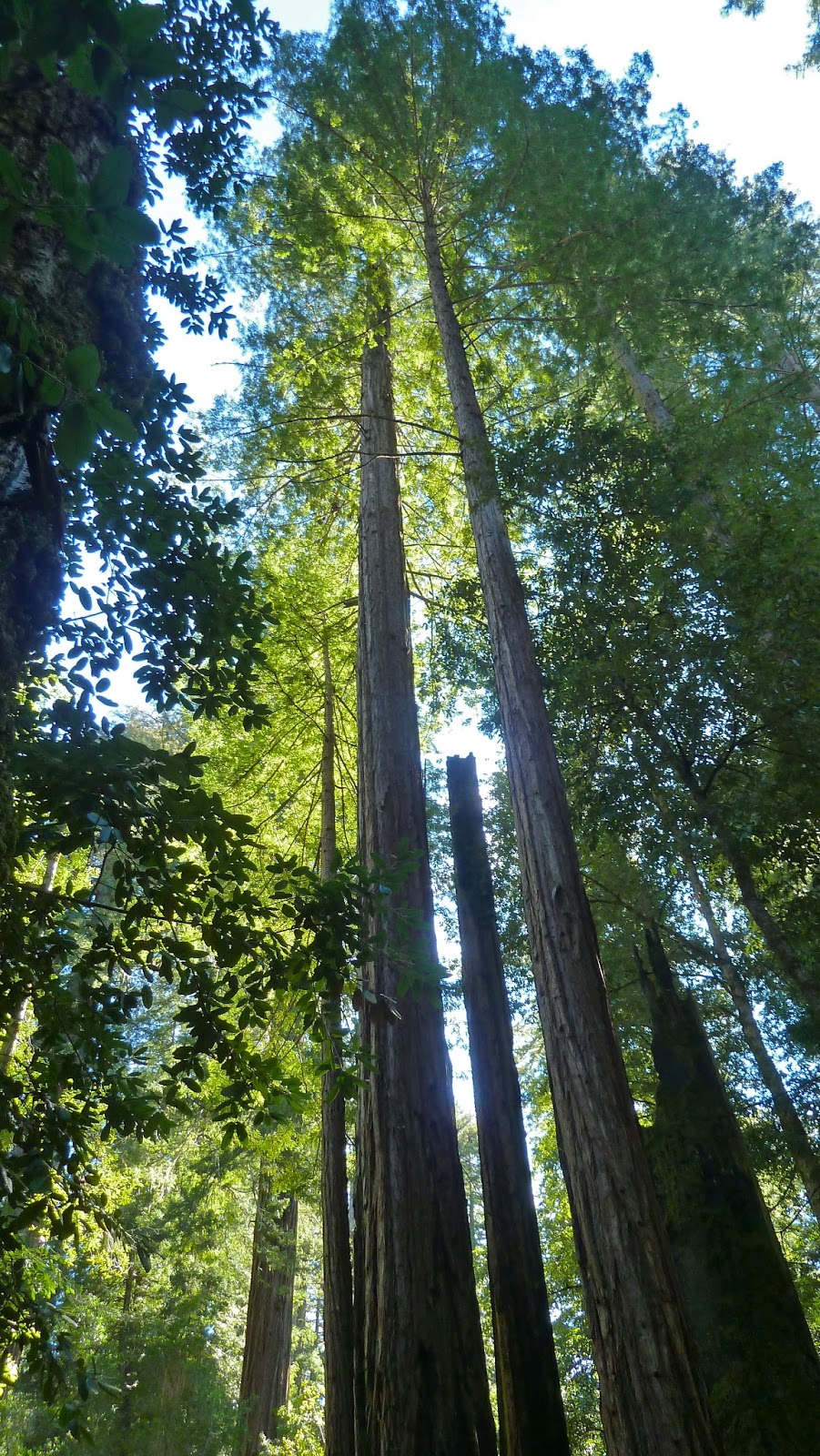
So it was all down to the Coast Redwoods for our big-tree experience. From San Francisco we drove south, eventually along slow, narrow, twisting roads, to Big Basin Redwoods State Park, whose address I love: 21600 Big Basin Way, Boulder Creek, Ca. You will recognise a familiar story when I tell you that Big Basin was the first State Park, founded in 1902 when it was realised that these magnificent trees had fast disappeared into 28 saw mills to meet the timber demands of the gold rush and urban development. This was the start of the conservation movement in California. Today, less than five per cent of a once-massive ancient forest remains: Big Basin's rare stand of Coast Redwoods includes trees ranging from 1000 to 2500 years old. Some are 100 metres tall and more than 15 metres in circumference.
The Redwood Loop Trail is short, and there are much longer ones, but your neck will ache after half an hour or so. You are compelled to look up all the time because these towering trees are almost unbelievable in their scale. And you'll try to spot the red-capped Acorn Woodpecker, who will soon make his presence felt by a noise resembling the soft thwacking of wood rather than a woodpecker's more familiar tapping. Thanks to my friend for this shot of what appears to be a woodpecker eating a chip.
Extremely tall trees are impossible to photograph adequately. I tried.
I quite liked group shots…
…and the texture of the bark.
The Coast Redwoods couldn't live to such a great age if they weren't extremely resilient. If their tops or limbs break off during a big wind or storm, a dormant bud will sprout, enabling the tree to continue its reach for the sky. The 'Mother of the Forest' at Big Basin lost her top in a storm, but she's expected to regain her former grandeur. The 'Father of the Forest' was less impressive.
The Redwoods have several survival techniques. Roots do not go deep but extend outwards nearly as far as the tree is tall, intertwining with those of neighbours to form a stabilising network. Leaves are able to extract moisture from famous fog that rolls in off the ocean. Bark is thick and protects the tree from fire damage: it contains little flammable resin but it does have a repellent against wood-boring insects and fungi. Clever trees. Survivors.
Which is more than be said for the original people of the region, the Ohlone. After the Spanish arrived, they were impacted by violence and disease, and forced into missions. Like the Indigenous tribes of the Australian continent, they had inhabited the Big Basin for thousands of years, forging a deep connection to the land. They hunted and nurtured and harvested plants, and practised cool burning. This all-too-familiar story of destructive European invasion struck several chords.
How do you measure the height of a Redwood? By climbing up it and dropping a tape measure. The tree is rigged for the safety of the climber and the tree. Scientists explore and measure many things as they ascend, but the search for the tallest tree is never-ending. Laser technology is also used to determine height.
Which is more than be said for the original people of the region, the Ohlone. After the Spanish arrived, they were impacted by violence and disease, and forced into missions. Like the Indigenous tribes of the Australian continent, they had inhabited the Big Basin for thousands of years, forging a deep connection to the land. They hunted and nurtured and harvested plants, and practised cool burning. This all-too-familiar story of destructive European invasion struck several chords.
How do you measure the height of a Redwood? By climbing up it and dropping a tape measure. The tree is rigged for the safety of the climber and the tree. Scientists explore and measure many things as they ascend, but the search for the tallest tree is never-ending. Laser technology is also used to determine height.
The road was almost as wiggly down the mountain as it had been up. Boulder Creek is an attractive little town where we stopped to fill up with petrol, creating time for a short walkabout. Laura, whom I passed by on a corner, introduced herself and shook my hand as she welcomed me to California. I noticed the tall trees were integral to the towns on the way down, homes fitting around them. Many cabins were in permanent deep shade and had internal lights on even though the sun was shining brightly.
Route 1 around Santa Cruz was traffic-clogged. We longed to reach Monterey. We were staying in Pebble Beach on the Monterey peninsula between Monterey town and Carmel-by-the-Sea. We decided to reach our house via 17-Mile Drive. This famous scenic route includes forest and dramatic coast and, unfortunately, several golf courses, which I tried hard to ignore. Why were the greens so vibrant in the middle of California's worst drought in hundreds of years, possibly longer? Because the golf clubs are rich enough to pay the penalties. They are not in the business of caring and sharing a precious resource.
The gated homes of the peninsula reflect enormous wealth and privilege. The 'private property' signs, restrictions on where you can walk by the ocean, even high fences in places keeping you away from the spectacular shoreline – and completely ruining photographs – are not conducive to feeling relaxed and at home, however beautiful the views.
The Drive itself is gated: you pay a US$10 toll for the privilege. I was determined to do it again, but felt disappointed and uncomfortable with the selectivity of the place. It didn't feel wild and free, but manicured, slightly sanitized and corporate, which of course it is, most of it being managed by Pebble Beach Resorts. Motorcycles are prohibited; presumably so golfers won't be put off their stroke by loud revving engines. If you're staying in Pebble Beach, make sure you tell the person on the gate you'll be coming backwards and forwards.
The wildlife was a good distraction, however. We saw whales offshore and sea otters in the shallows. The variety of shorebirds was impressive. And the iconic Monterey Cypress (top of page) adds drama to a stunning coastline. For your $10 you get a little brochure denoting highlights along the route: Point Joe; Bird Rock; the Ghost Tree; Fanshell Overlook. It is all extremely beautiful; but there was most definitely a but.
| Monterey Bay and Santa Cruz mountains from Shepherd's Knoll |
| The Restless Sea |
| Bird Rock? (Western Gull) |
| Cormorants, but are they Brandt's? |
| Sea otter |
Our lovely house was buried in the Del Monte Forest but we could see the ocean. The glass-walled room on the side I called the lap room. Or the inside-outside room. As in San Francisco, we wished we had more time there. The next day was a chillin' day in Carmel-by-the Sea.
All those years ago I stayed in a condo and carried groceries home in a tall brown paper bag. I felt thoroughly American and wanted to pause my life. Clint Eastwood was once the town's mayor. Yes, it's fairytale land. I remember Carmel's beach was gorgeous, and it still is, but the town was not quite as I recalled. It all looked rather twee and touristy rather than cool. But the shorebirds were great.
| Marbled Godwits? |
| Synchronised Sanderlings |
| A different Gull |
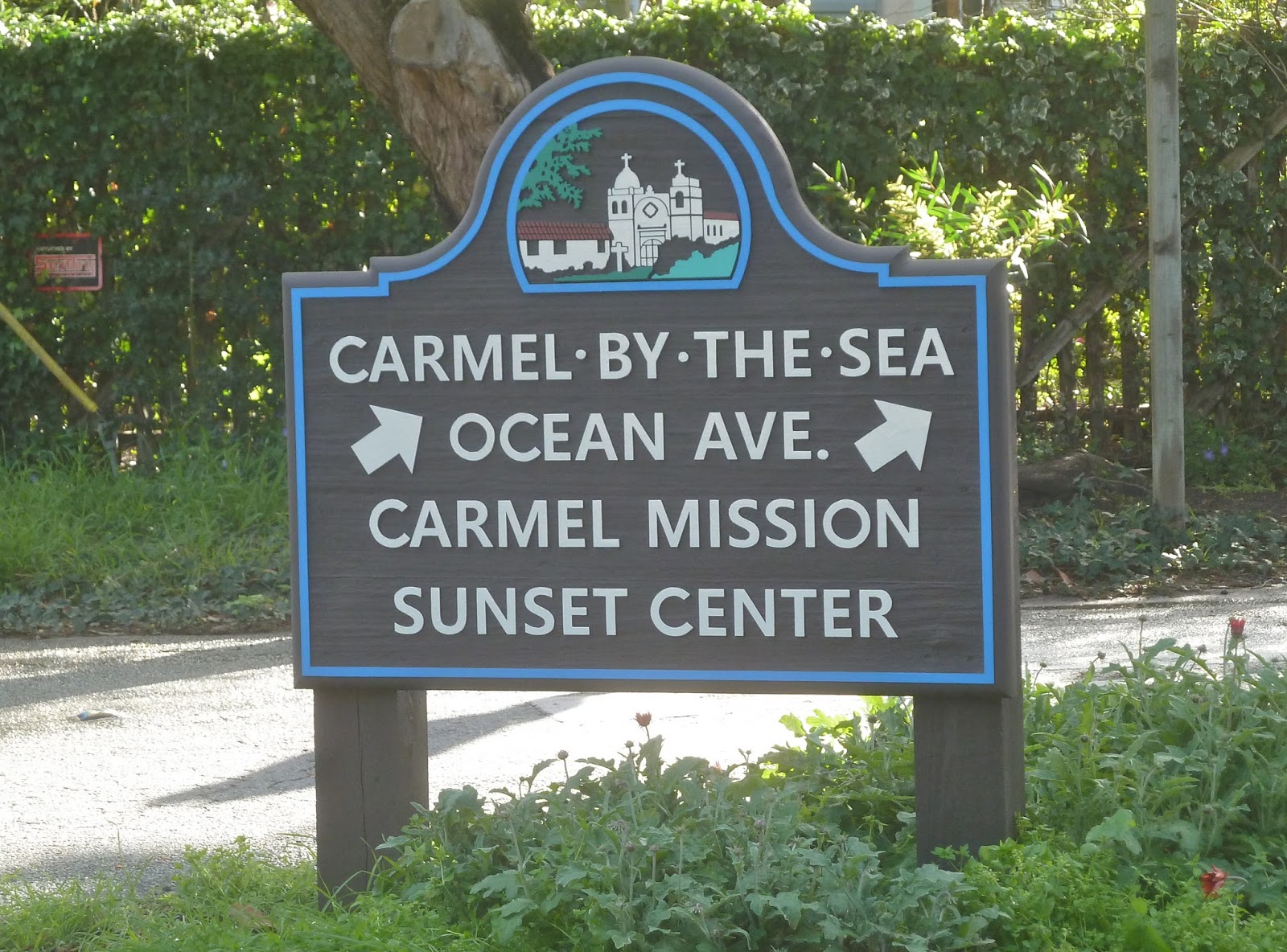
Here's my take on Carmel-by-the-Sea, which I loved despite the tweeness, and the lack of decent coffee shops for breakfast other than sticky buns, with the exception of La Bicyclette, whose eggs were in purgatory. We actually ate a damn good dinner at a golf club restaurant on a stormy night (the only bad weather in two and a half weeks, and under cover of darkness). At Porter's in the Forest the food – I remember artichokes and halibut – was excellent, and the service equally so since we were virtually the only people who had ventured out on such a wild Wednesday.
The ocean driving had only just begun, however. There was great excitement about California State Route 1 upon the morrow.
Subscribe to:
Posts (Atom)