January 30, 2016

That day at the end of Jan

Every year since we came to live in Brisbane, we've taken advantage of the public holiday on the 26th of January to explore wild places within 100 kilometres or so of the city. We soon learned that many Queenslanders leave town for their favourite haunts. They make an early start, to bag parking space, barbie and picnic bench. They don't seem to mind being close to many others doing the same thing in the same place: the herding instinct appears quite strong.

We're the opposite. We want wild places to ourselves. We're basically antisocial, but mainly it's because we want to be able to hear birds call and animals rustle.

The first year, we made a leisurely start down the Cunningham Highway, marvelling at how little traffic there was. By the time we reached Lake Moogerah it was rammed. Watery places will always be so.

With each passing January, it has seemed more and more appropriate to find as remote a spot as possible to appreciate the land more like it was when the original Australians lived without foreign intervention. A time before timbergetters and miners and farmers who tried to impose alien practices on harsh country. One reason is that the thing about Australia we celebrate most is its landscape and fauna and flora – from unspoilt beach to unforgiving desert – and I spend a lot of my time advocating for their protection and conservation. But the second and more important reason is that I feel increasingly uncomfortable celebrating a past event that is remembered from a totally different perspective by those here ab origine. And that discomfort is greater now we are citizens ourselves.

Of course, we use trails I suspect were originally cut by loggers and are now enjoyed by off-roaders.
How and when 'Australia Day' should be celebrated has become a much hotter topic of late; opinions more polarised. The best things about Australia vary from one individual to another; from one time of year to another. While more and more people acknowledge that 26 January was 'Invasion Day' and massive wrongs still need to be fully acknowledged and atoned, there are those who believe Kevin Rudd's apology* in 2008 was enough, and we should all move on. How convenient.

Those who remain to be convinced that there's a lot more work to be done to achieve reconciliation should listen to Stan Grant's speech** during an Iq2 (Intelligence Squared) debate on racism last October, but only released the week before Australia Day, rather provocatively some say. His words came directly from the heart, not pages of text. Take note of the comparative figures of premature death and juvenile incarceration. Observe the faces of the audience, which speak further volumes. They know how much more there is to do to truly make Australia the country of the fair go.

I am aware how much effort is required. I felt uncomfortable in Alice Springs in the face of widespread evidence of disadvantage: I visited the wonderful Desert Park, but saw nothing of the Indigenous town camps. They are the last places travel or government sites recommend you go. In Yulara and Uluru, I bought beautiful Indigenous wooden artefacts but they were sold to me by white distributors. As was the art we purchased in The Alice. What would I have said or done had it been otherwise? I only think of this now, but I was probably subconsciously relieved at the time. 

I am ashamed of the fact that in six years I have only had two meaningful conversations with Indigenous people. The problem is, I have no idea what to do for the best. But not celebrating the 26th of January with champagne and fireworks seems to be a very small step in the right direction. 


January 28, 2016

Where to from here?

I've never been one for New Year's Resolutions. In Australia, they seem even more doomed to failure since everyone's on the biggest holiday of the year. There's no change of behaviour required of climate activists or environmental protectors, however. Regroup and make plans; the issues haven't gone away during the summer.

Following the excitement of the Paris Climate Conference at the start of December – and if you believe all remaining coal reserves should stay in the ground then it was not a good outcome – the focus now becomes this year's federal election here. Australia's poor climate-action rating in the planetary scheme of things, charted in the Sydney Morning Herald on 8 December (below), was exemplified by the December 2015 quarterly emissions report (to June 2015) released extremely quietly on Christmas Eve, always a good day to bury bad news. It showed Australia's emissions rose by almost one per cent 2014-15, compared with the previous year*.
Things are unlikely to improve unless there is a change of government. Minister 'for' the Environment Greg Hunt has recently been sitting in his office striking out conditions previously attached to coal mine approvals, making it easier for proposals to get off the ground and for resource companies to make profits. Wouldn't his energies be better employed working out how to make mining companies ultimately responsible and accountable for the rehabilitation of their mine sites? This is a huge problem in this country, and the public should pressurise the federal government to make polluters pay.

Clive Palmer's Queensland Nickel refinery is a fine example of how companies extricate themselves from their environmental obligations, if we are to believe the Australian Financial Review**. As QN totters on the edge of the precipice, taxpayers in this cash-strapped state are least likely to be able to pick up the bill when 'financial assurance schemes' prove massively inadequate. (See Post script below.)

There are more than 50,000 abandoned mines across Australia, where, in the early days, mining companies just upped and left when profits dried up. Has anything changed? When a company obtains an approval to mine these days, it pays a woefully inadequate rehabilitation security and the terms of clean-up are woolly and protracted. Stringent measures are required to ensure that pollutants cannot contaminate land or water; that the landscape is stable and safe for grazing animals and cropping; and that land is rehabilitated sustainably.

In mid-December, the environmental ministers of those states beholden to the coal industry – namely Queensland and New South Wales – ensured that Australia's National Clean Air Agreement did not embrace World Health Organisation clean air recommendations. Victoria and the ACT independently adopted WHO's pollution guidelines, but it doesn't look likely that we'll be getting covers for coal trains trundling through Southeast Queensland any time soon. That fight continues.

Last November, an Asian partnership won the tender to build a gas pipeline across the Northern Territory from Tennant Creek to Mount Isa in Queensland. This will serve the NT's shale gas industry, bringing fracking to the region and constructing a pipeline across 622 kilometres of arid lands where, so far, no ecological field surveys have been conducted. Job opportunities blind state governments to conservation concerns.

The pipeline plan is in addition to the Queensland government offering 11,000 square kilometres of Channel Country for exploration by international oil and gas companies (in May last year), allegedly without prior consultation with Traditional Owners of the land. Native title rights cannot be swept under the carpet in the pursuit of profit. Neither should limited and ephemeral water supplies be compromised. Water, in fact, must be placed at the top of the list of priorities across all economic sectors.

Despite a poll last October than indicated the Australian public had got a sense of perspective about the coal industry and its environmental damage†, a poll published last Friday showed that PM Malcolm Turnbull's popularity has increased against that of Opposition leader Bill Shorten††, despite Turbull's lack of action – apart from smugly smiling, that is.

So, I'm opening my election campaign with this thought. I know the Australian Labor Party and the LNP are almost indistinguishable when it comes to transitioning from fossil fuels to renewables, and I support neither for this reason alone. But I believe Labor will be quicker than the self-aggrandising Liberal Coalition to grasp that we have no alternative course of climate action.
Post script 29 January 2016. I wake this morning to a report in The Guardian about an opportunistic 'mining minnow' buying an Anglo American cast-off (the Callide mine in Queensland's Bowen Basin) for a pittance. The $640,000 question – that's a saying, the cost of rehabilitating the mine would be at least $120 million – is how will they raise sufficient funds to clean up? This will present an ever larger and more widespread problem as coal becomes an ever dodgier commodity. http://www.theguardian.com/environment/2016/jan/29/coal-giants-abandon-unprofitable-mines-leaving-rehabilitation-under-threat?CMP=share_btn_tw

http://www.environment.gov.au/system/files/resources/cb14abbb-3a4b-406f-a22d-86f565674c3e/files/nggi-quarterly-update-jun-2015.pdf
**  http://www.afr.com/business/mining/clive-palmers-qld-nickel-cut-287m-set-aside-to-clean-up-toxic-sludge-20160118-gm8pt6
† http://350.org.au/news/majority-of-australians-agree-coal-is-bad-for-climate-reef-and-health/
†† http://www.theguardian.com/australia-news/2016/jan/22/turnbulls-popularity-soars-over-summer-as-shortens-suffers-poll-shows


January 24, 2016

Summer in the city 6: Enoggera Reservoir

The D'Aguilar National Park lies northwest of Brisbane, roughly between Wivenhoe and Samsonvale reservoirs. The North D'Aguilar Section includes what used to be called Mount Mee State Forest; and the South D'Aguilar Section was formerly Brisbane Forest Park. In the extreme southeast corner of the Park, just 12 kilometres from the centre of Brisbane, is Enoggera Reservoir, part of an SEQ Water estate. It is accessible off Mount Nebo Road in The Gap, via Walkabout Creek Visitor Centre.

'Venture diversely', says the Queensland National Parks Discovery Guide to the D'Aguilar. We were looking for birds as we walked the Araucaria track (5 km return) around a small proportion of the indented Reservoir. By the way, I don't know why it's not called Enoggera Dam. We chose a Saturday afternoon in the summer holidays, and the car park was still rammed at 3. There would be more spaces except that some of them are double length, for boat trailers. Lots of people had parked on the access road.

First we had a cuppa in the Green Tree Frog Cafe, which is very pleasant, with a deep-in-the-forest feel to it.
Initially, we weren't optimistic about finding birds, the noise from the 'beach' being loud and screamy.
Fortunately for us unsociable, peace-and-quiet types, the path soon heads around a mini-inlet, out of earshot of the fun-loving shouty people. Immediately, some birds appeared. By the end of our relatively short walk we had seen two types of Fairy Wren (Red-backed and Variegated), Brush Turkeys, Pacific Black Ducks, Dusky Moorhens, Sulphur-crested Cockatoos, Ibises, Honeyeaters (possibly Lewin's), Magpies, a gang of four juvenile Torresian Crows, and possibly a Spangled Drongo. Heard but not seen were Eastern Whipbirds and Bell Miners (to us, aka Tink Tinks). Plus a couple of unidentifiables.
Mama Moorhen
Moorhen chick trying to catch up
The forest didn't appear to be particularly out of the ordinary, but I don't think we've ever been on a walk in Australia when we didn't find something interesting. Today, there were carpeted lilies; brilliantly coloured bark; and striking reflections and contrasts.
We passed a couple of walkers at one point who told us there were two koalas (I thought they said) round the corner. In fact, they'd said goannas, which we came across instead, much to my disappointment. The goannas redeemed themselves by tree-climbing, which always seems such an extraordinary feat for them, and these were big.
Goannas are large monitor lizards and were so called by early settlers who were reminded of South American iguanas. There are more than 20 species of monitor lizard in Australia, which all look much the same but differ in size. The largest is the Perentie, which we didn't see, unfortunately, but were hoping to, on our last Outback trip.

Towards the end of the afternoon, the track was popular with runners. It's a manageable distance with a few up-and-downy bits to improve stamina. If you search online, you'll find references to a much longer walk, all around the Reservoir, but there isn't an official track, and you'd need a decent map (topographic map available at the Visitor Centre) to find your way along management roads before joining a shared trail (horses, cyclists and walkers) along South Boundary Road and then Payne Road to get you back to Walkabout Creek.

If you don't want to walk at Enoggera Reservoir, you can do beachy things, kayak (only paddle craft allowed on the water), or mountain bike, and all of it in Brisbane's backyard.
Dam and the back of Mt Coot-tha


January 19, 2016

I never thought it would be easy

I may have told you: I once knew a couple in the UK; she was an Aussie and he was a Brit. They got married and moved to Australia because that was where they wanted to bring up kids, in the great outdoors and the sunshine and all that. They returned in less than two years, however: Aussie bureaucracy had driven them crazy; in particular, having to get a new driving licence every time they moved interstate. Perhaps she'd forgotten the rules. The joke is, Brits who haven't lived elsewhere think the UK is a bureaucratic nightmare. Trust me; it's not.

The first hurdle when we moved here was, of course, the visa. My friend and I aren't married, and that makes-life-easier tick-box can eliminate several hoops of fire at a stroke. We had evidence of jointly designated utility bills (but for too few years); bank-statemented evidence of financial transactions going back to the '90s (but not a joint bank account); and even proof of being each other's beneficiaries (of pensions, for example). But none of that was good enough. We were asked to make declarations about our relationship, to be constructed around the answers to questions of such a deeply personal nature I decided moving to Australia wasn't such a good idea after all. I offered instead to be interviewed in Australia House in London to prove I wasn't a cling-on to an engineer seeking a different life downunder.

Was I prepared to sacrifice a wonderful opportunity for the sake of my privacy principles? I never found out because the visas were granted in record-quick time before I had to choose whether or not to write a fairytale romance.

Four years later came Permanent Residency, and a new range of obstacles, such as police reports – from the UK and Australia; medicals – requiring two appointments because we didn't realise we had to take our passports to the doctor's; and stat-decs (statutory declarations) by Australian citizens who had to have known us for three years. Fortunately, there were one or two.

In trying to be truthful, I inadvertently made more work for myself. In providing details for the British police, I listed another name I'd used in the past, the surname of my children's father. Way back then it had made life easier, because some people in small towns still found it odd if a child's name differed from its mother's, although I had never changed my name officially when I got married. I did not declare this name in the Australian paperwork because it wouldn't have been found here in connection with me. Some eagle-eyed legal in Sydney noticed the discrepancy and asked me to explain. Another stat-dec had to be generated.

A little over 12 months following the granting of Permanent Residency, we applied for Australian citizenship. So soon after PR, this proved to be a relative doddle. The only stress factor was that my friend got his before I did, and the cling-on factor reared its head momentarily.

You might think, after all this, that an Australian passport would be a formality. Nope. A different department presents new challenges, largely in the form of the Post Office, agents for the Passport Office. Last week I was in my local PO and witnessed a poor chap having his passport applications rejected. He'd used blue ink; his signature had escaped the box; and his children's birth certificates were not quite in order. He didn't say a word; he just looked awfully dejected, and completely lacking in the will to continue.

My friend and I checked each other's paperwork, and then checked it again. And one more time. Then, last Saturday, we took in the forms, with trepidation, citizenship certificates, Queensland driving licences, Medicare cards, and photographs duly witnessed by yet more Aussie citizens who'd known us for three years. We'd written in black and kept within the boxes. But we didn't get far: we didn't have our birth certificates with us. They hadn't been included in the list of documents required but were mentioned elsewhere on the form and we hadn't noticed. My photograph was rejected: I was ever-so-slightly inclining my face; my fringe was too long; and the hair at one side was obscuring my face. It wasn't hiding an eye or anything important, just cheek extremities. In addition, we hadn't initialed changes. (When you're afraid of making mistakes on a serious form, you're sure as hell going to make some, aren't you?) My photo-verifier had made a mistake in the naming of names; and my friend's photo-verifier had used blue ink. Go back to start.

My friend took his form into a PO near his office yesterday. His photo was rejected: it was too small, even though it had been taken there, last year. They took another one, and approved his application to go into the system. This morning, I returned to the same place as on Saturday, with most amendments as requested. A different person checked it. He had a query about my birth certificate that I couldn't have answered to save my life: why did it say 'Third' after the name of the town of my birth? I had never noticed that. I guessed wildly: 'Third administrative district?'. He would have to add 'Third' to my application form, he explained, or there'd be a discrepancy with the accompanying photocopy of my birth certificate. 'But, please,' I said in a small voice, 'They won't put "Stockport Third" as Place of Birth on the passport, will they, because there's no such place in the UK?' He went away to call the Department, and then noted my request on the form. He made no comment whatsoever about my photo, unchanged since Saturday. I paid the $254 fee, my application went into the system, and I left as quickly as possible.

Others have mentioned a high rejection rate; how they took the same form to a different PO and had it accepted. If my friend and I hadn't had two different experiences on two different occasions I might have some faith that new Aussie passports will eventuate (at the end of a maximum of 21 working days) without further ado. But I know we're not out of the woods yet. I know some random nit-picky job's-worth processor in the Passport Office – if their bus was late, or they were having a bad hair day, or their favourite team lost the footie last night – might take exception to my fringe. I'm also afraid I'm tempting fate by writing this before I'm clutching an Australian passport in my clammy little hand.

Go back to start? I'm just not sure I could bear it.


January 14, 2016

When the Sunshine State sizzles…

There is no such thing as a cold tap.

Parking spaces beneath trees cannot be found for love nor money.

Cold air escapes from the open doors of airconditioned outlets as they chuck loadsa money at the power companies with ne'er a thought for energy conservation (not-so-Smart State).

Folks flock to cinemas (where the aircon is often on sub-arctic setting all year round) or shopping malls in order to bask in the cool.

They sit in stationary airconditioned vehicles with the engine running for ages, adding to Australia's emissions and filling nearby homes with unnecessary fumes.

Uninsulated walls and tin roofs absorb heat, rapidly warming your home as soon as you give the aircon a rest.

People fling themselves into water – any water – with even more gusto than usual.
Walking anywhere for more than ten minutes is not an option after 11 am.

Most washing dries outside in a matter of minutes, but people still use dryers.

Even scaredy-cats look forward to storms – as long as there's no hail, which can be enormous and damaging and more noisily terrifying than any other storm element.

One storm cell may produce tens of thousands of lightning strikes.

There are more unexplained power outages than usual.

At home, you live largely in a twilight zone, with blinds down from mid-morning until early evening.

Several showers and changes of clothes a day may be necessary, especially if humidity is high.

Sometimes you're secretly relieved there's no Daylight Saving Time as you yearn for the merciless sun to drop beneath the horizon.

You marvel more than usual at the fact that most roofs are not plastered with solar panels.

You consider the hitherto unimaginable: owning more than one pair of 'thongs' and shopping in shorter shorts than you'd have worn to the beach in another life.

It's too hot to wear jewellery.

Even the birds pant.

It may well be hotter in Australia's other state capitals (except Hobart) than it is in Brisbane.


January 8, 2016

Watch on weather: cats 'n' dogs

The first time it rained like it did the other day, we'd been living in Australia three or four months, in 2010. It didn't stop for about three days. Technically, it wasn't even the Wet season. My friend had driven the car to work; we had no bicycles then; we'd brought cold-weather gear with us (for visiting New Zealand) but as yet hadn't appreciated the need for waterproof trousers during flooding rains. It was only a 10-minute walk to the shops, but in such a downpour I'd have been drenched by the corner of the road. Our original Australia advisor – the Irishman who recommended my friend for the job – had told us there was no point to an umbrella in torrential rain here. He was not wrong.

I cobbled together scraps of this and that from the fridge for supper for a couple of days. I'd got into the French way of food shopping: each day I walked to buy ingredients because it got me out of the house and familiarised me with my new surroundings. So the fridge wasn't stocked. But, I tell you; there is no incentive to venture out into such hard rain.

I didn't blog in those days, but my diary mentions hours of continuous heavy rain – and marvels that I was already complaining about the weather, having been in Australia a matter of weeks.

On Tuesday, our weather station told me we received almost 60 mm in 24 hours. 'It's raining cats 'n' dogs,' it said on the screen. How colloquial. There was lots of rain all over southeast Australia.

In the week before christmas, a supercell tornado ravaged south Sydney about the same time as Higgins Storm Chasers were warning that a cyclone might develop in Far North Queensland. Lots of areas did get rain, but without the damaging winds. Further south, however, in Central Queensland, many of those stricken by the ongoing drought received a few tens of millimetres at best. This week I wished I could have swapped weather with my friend near Alpha.


January 6, 2016

The tyranny of distance

It was the time of year when you realise all over again that christmas in subtropical climes will never be right. When for weeks you want time to accelerate; and then stall; but naturally it does neither. When passenger planes giveth, and taketh away.

The worst part of that last bit is when you've dropped your precious cargo off hours prior to long-haul, and they wait apprehensively in Departures while you sit forlornly in an oddly silent lounge 15 minutes down the road. Can't bear that interval.

Our family's norm is a half-planet separation. In this continent of vast proportions, even the Great Ocean Road contingent is a major mission from Brisbane: at least two hours' flying time, then a one-and-a-half-hour drive. There's no popping down for an impromptu Sunday lunch. Our mutual christmas gift was ten days' togetherness.

A phrase often heard in Australia, The Tyranny of Distance (How Distance Shaped Australia's History) is the title of a book written by Geoffrey Blainey, first published in 1966. It's a must-read for an Australian education, like The Lucky Country, The Australian Ugliness and A Secret Country*.

These days, it often describes the tribulations of large-hatted Independent federal MPs who work in Canberra but represent sparsely distributed constituents in regions of Queensland larger than an average European country. Or long lonely journeys through hitherto unimaginable and inhospitable remoteness, which some folk actively seek but others avidly avoid.

And the emotional angst of expats briefly reunited with nearest and dearest before being brutally wrenched apart again by an inevitably untimely farewell.

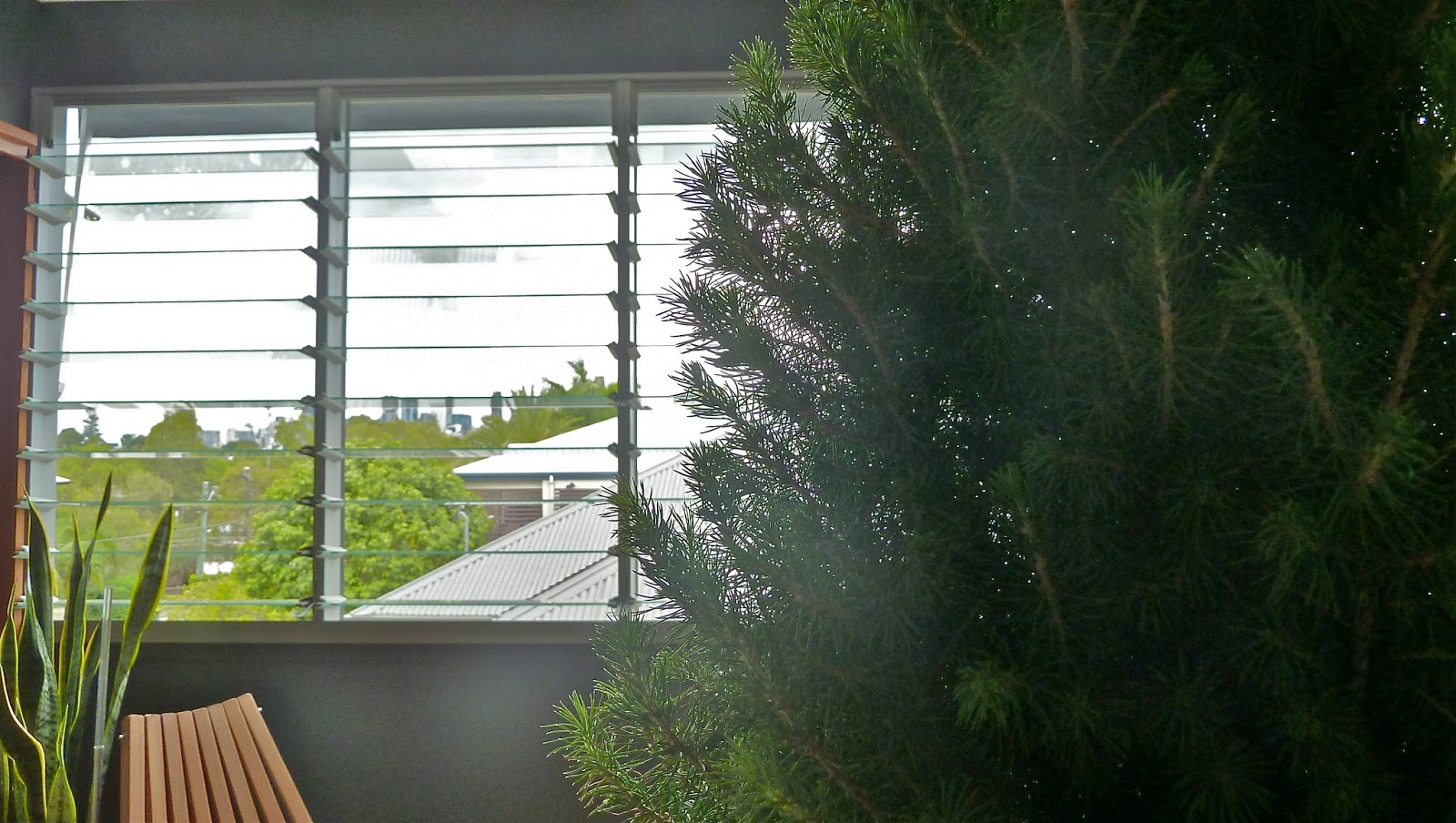
In the days before the first arrivals, clutching many to-do lists during countless shopping forays, I tripped across town to collect a real christmas tree. I asked if I could linger awhile in their yard, inhaling pine nostalgia. I hadn't realised how much I missed it. Some things never leave you despite the best of adventures in new lands.

We were blessed with cooler-than-hot temps and lower humidity than usual for many of the ten days, but the passions of close family members deprived for an unacceptably long time were not to be dampened by the temporary absence of Queensland's summer. All was not trauma and tears, however: long-overdue tellings evolved from confessionals; we were all aMaezed; and in the end, the love you take is equal to the love you make; they say.

Then the aftermath… once-busy rooms stripped of bedding and joy; decorations down three days early; borrowed extras returned; and hours of escape into 700+ pages of the 2015 Man Booker shortlisted A Little Life.

Normal service will resume shortly.

* by Donald Horne, Robin Boyd and John Pilger respectively