

And the city has finally caught up with Brisbane and Melbourne in offering a travel card that enables you to move seamlessly from ferry to bus to train, as need be, instead of constantly having to find shops that sell bus tickets, queue at busy ferry terminals behind dithering tourists, and guesstimate how many trips you're likely to make over a few days' stay. Put money on an Opal card and if you don't use it all, there'll be some ready for next time.
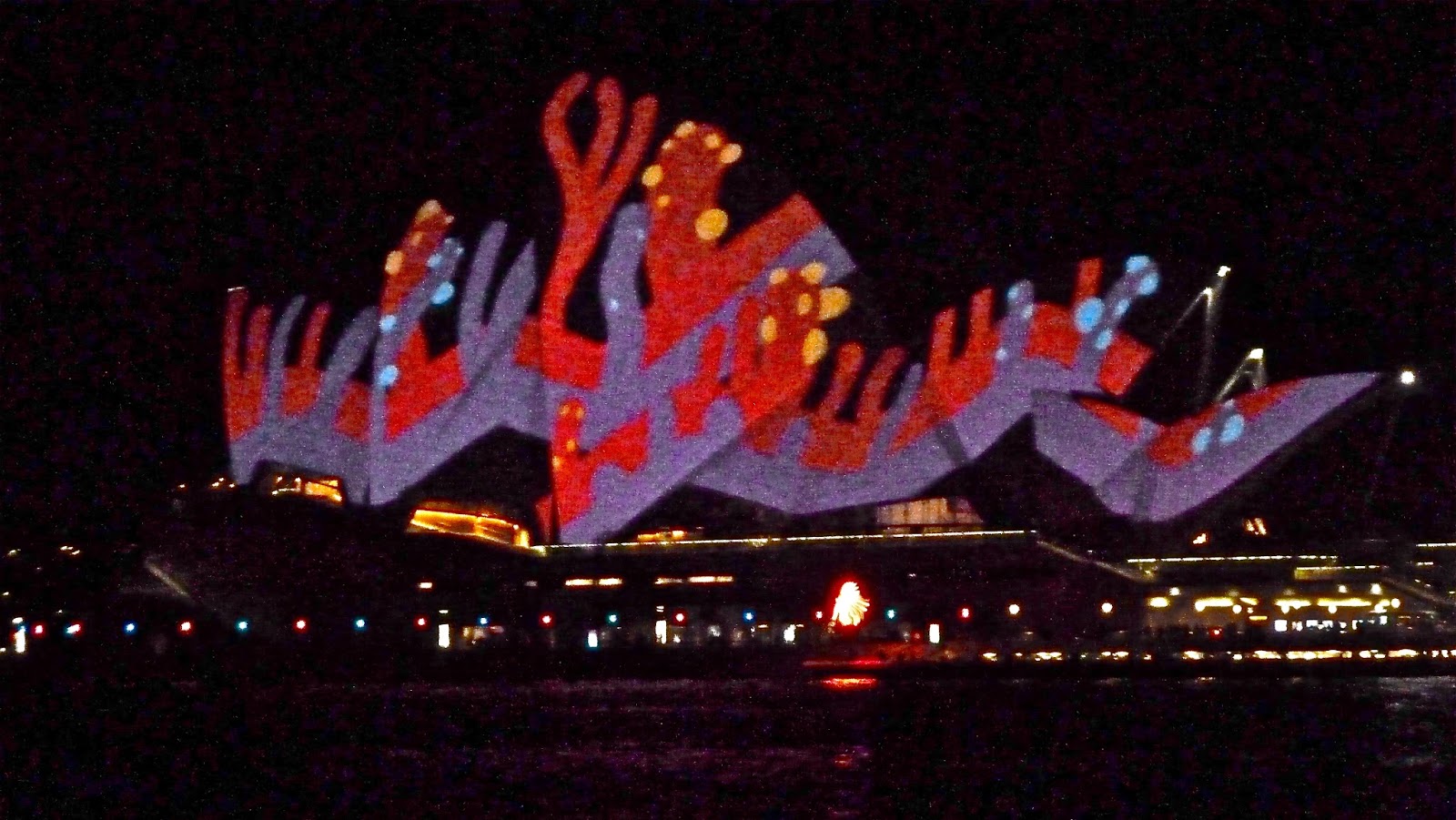
I am compelled to photograph the Opera House. Every visit. It doesn't matter how many pictures I have already, I have to take more. I try to find different angles.


Our reason for visiting Sydney last weekend was not that of hoards of others, who were taking advantage of a holiday weekend (Australia's queen's birthday) to experience Vivid Sydney, an 18-day-long festival of light and music. Light installations and large-scale projections transform urban spaces and key buildings in the city centre, while local and international music acts perform at the Opera House and other venues.
We were there for a dear friend's art show opening in St Leonard's on Saturday afternoon. The following evening we listened to 1000 voices singing choral classics from Carmina Burana to the Hallelujah Chorus in the Concert Hall at Sydney Opera House. They were ChorusOz – part of Sydney Philarmonia Choirs – an unauditioned group that comes together annually to rehearse and perform major choral work over a weekend. It was stirring stuff, but getting to and from The House – in fact moving anywhere around Circular Quay, lower George Street or The Rocks once it was dark and a human tide was flowing from one light show to the next – was not a pleasant experience.


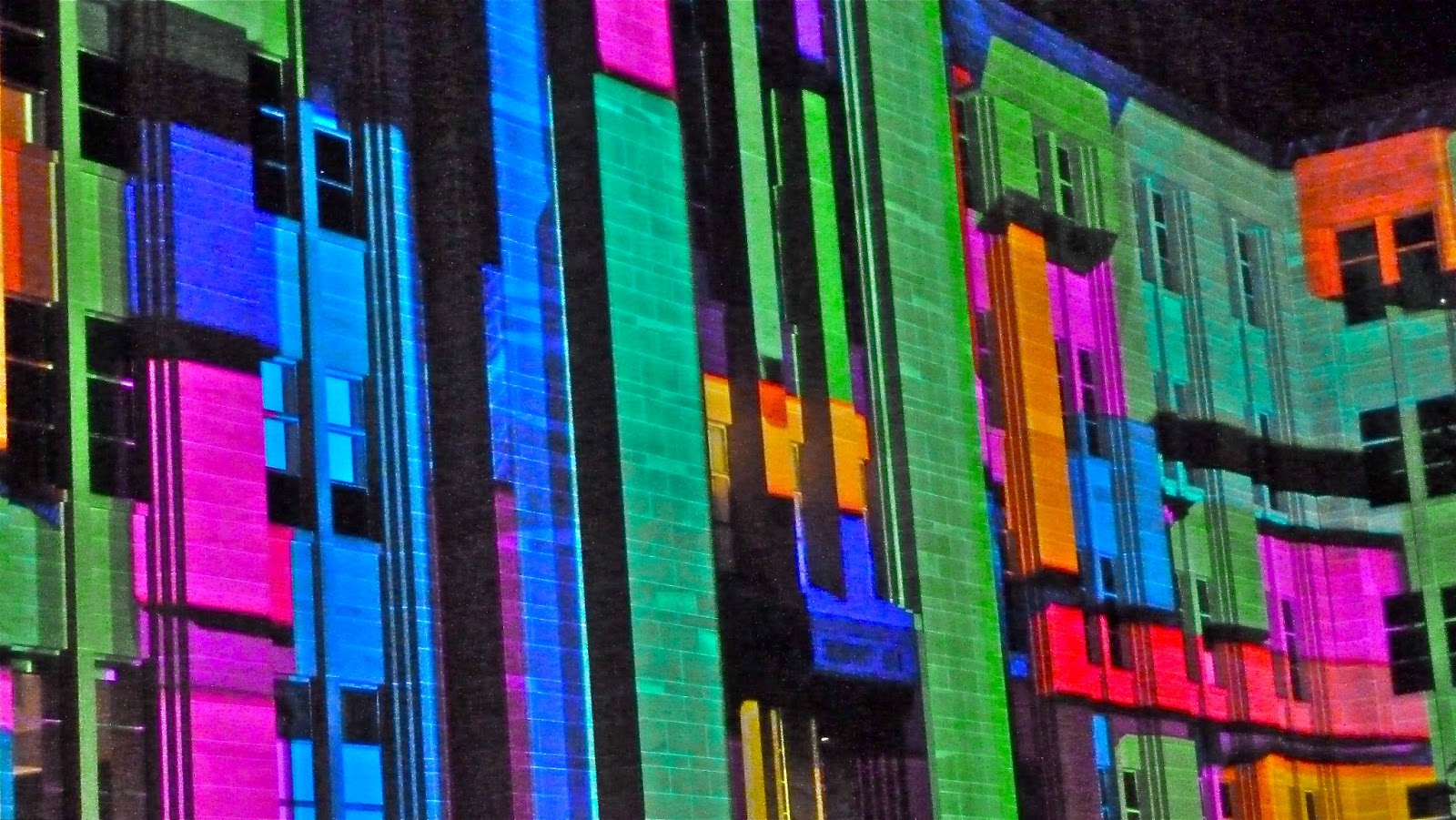


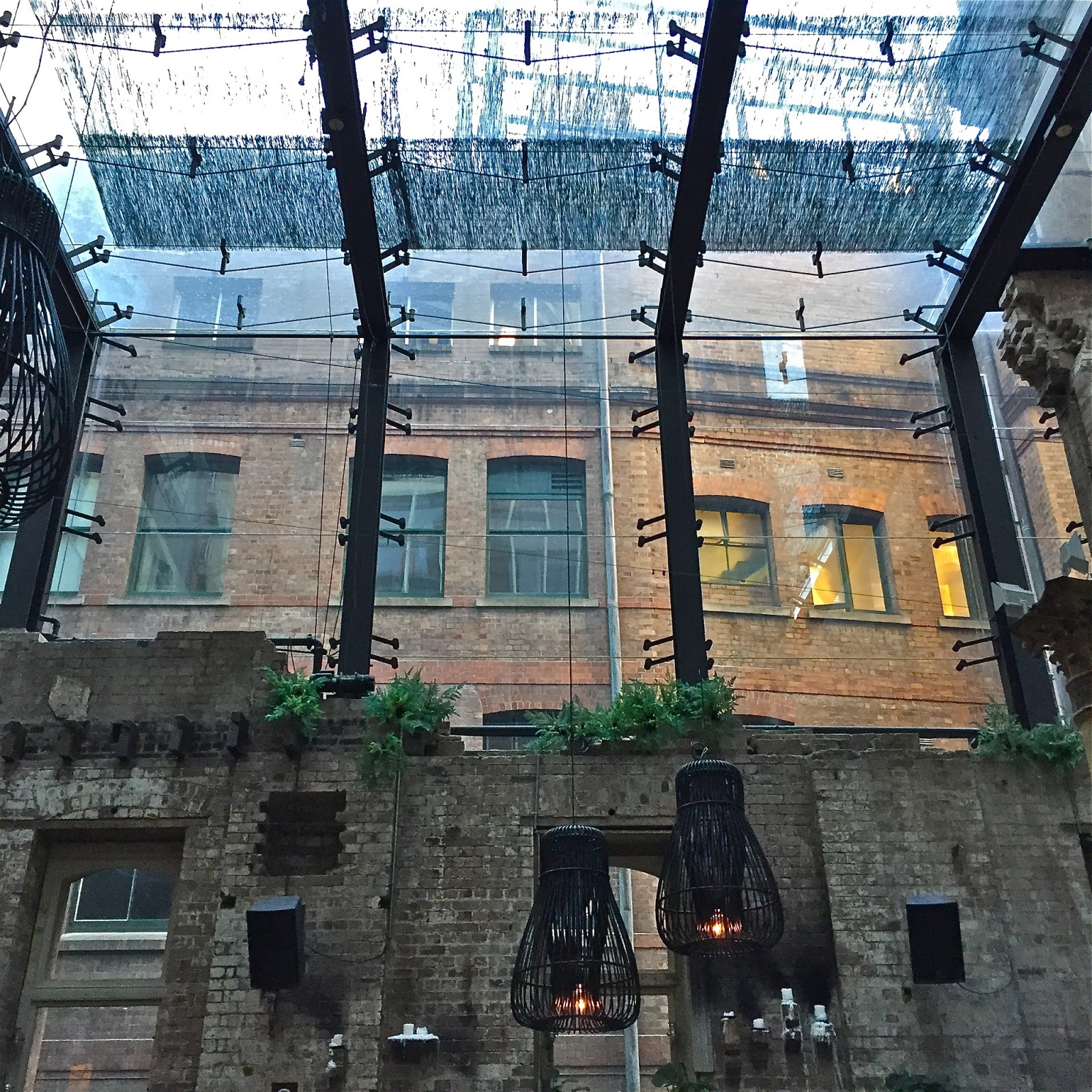
We arrived Friday evening. As a special treat, we were staying in Establishment, tucked down an unassuming alleyway between Pitt and George – Bridge Lane, off Tank Stream Way. You could easily miss the entrance, a large metal and timber door, an original element of the Holdesworth Macpherson and Company hardware emporium. The brick exterior belies a chic designer interior and luxurious rooms. Establishment is part of a complex of bars and restaurants that includes the Establishment Bar, a 42-metre-long marble bar amidst splendid iron columns, with a 'Garden' at one end, where you can eat or drink at any time of day and recharge the batteries. We grabbed a quick bite in Tank Stream Bar before going to look at the lights for the first time.
  |
| Garden |
 |
| Establishment Bar |
On Saturday morning we caught an empty bus to Crown Street in Surry Hills, for breakfast. We like Surry Hills. It's all about detail and colour. It was damned cold, which didn't deter Sydneysiders from sitting outside. We huddled inside like wussy Queenslanders: my friend had left his sweater in our room.


We caught a bus to Paddington, about 10 minutes away. It was market day.


Next day was Botanic Gardens day.


 |
| A crackle of Sulphur-crested Cockatoos |


The grey-headed flying foxes are long gone from the trees around the cafe in the middle of the Gardens. After a great to-do – their roosting was blamed for the loss of more than 50 trees, some of them irreplaceable – the bats were displaced in 2012. Some of them relocated to a forest on the coast near Macksville, creating a new headache for the authorities. The forest had been approved for clearance as part of a Pacific Highway upgrade, but bats are a protected species. There's a kind of poetic justice in that turn of events for Sydney's bats. Depends if you like bats, I suppose: I do.
In the dead of Sunday night a monster entered the Harbour. It dwarfed the largest ferry, made the Bridge appear small, obscured the best view of The House from around the Quay, and may have spewed out more than 2000 passengers into an already crowded city. I'm sure many people fancy the idea of a cruise, but being trapped with that many people is my idea of hell.

In the dead of Sunday night a monster entered the Harbour. It dwarfed the largest ferry, made the Bridge appear small, obscured the best view of The House from around the Quay, and may have spewed out more than 2000 passengers into an already crowded city. I'm sure many people fancy the idea of a cruise, but being trapped with that many people is my idea of hell.

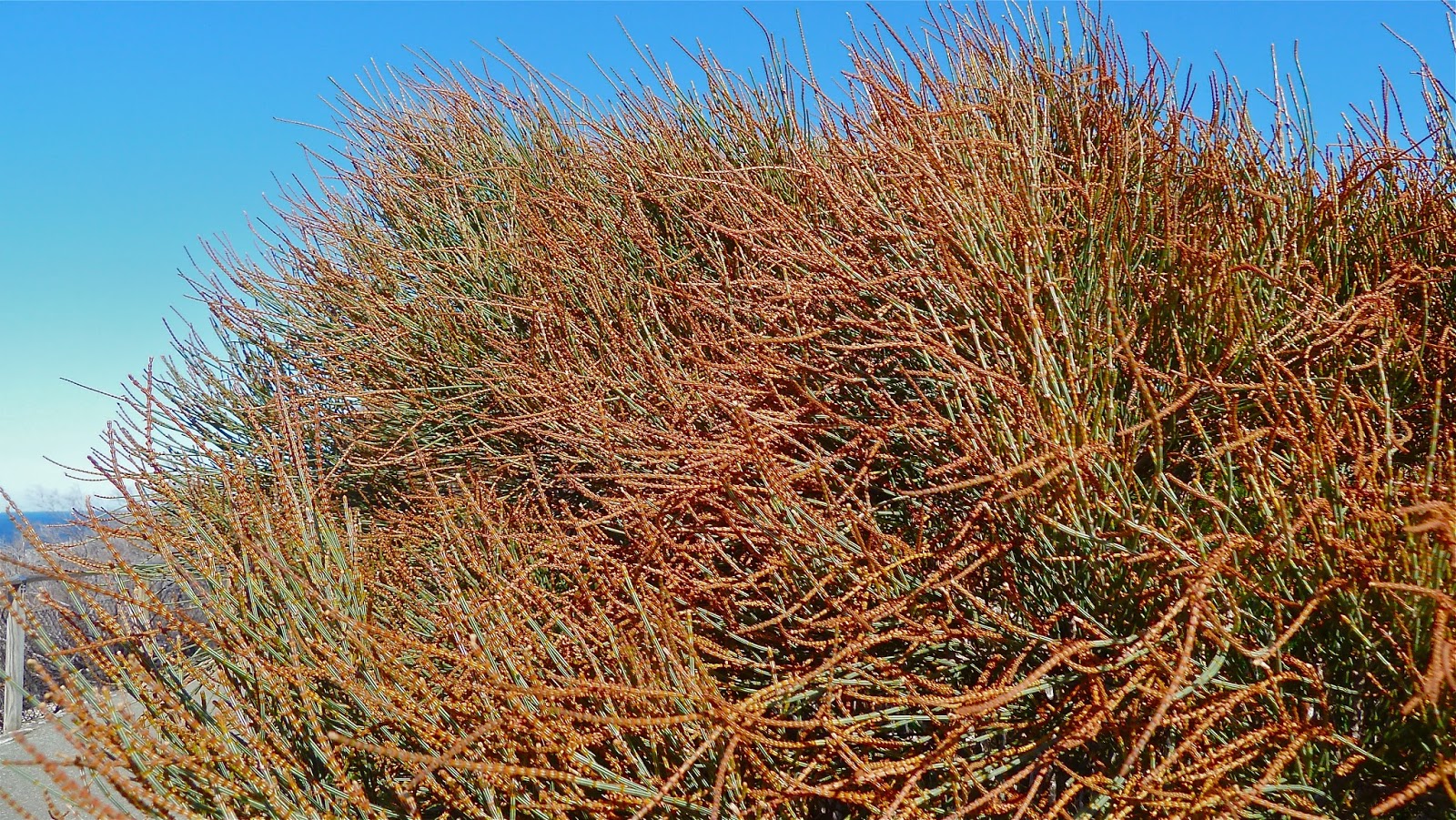
We walked away; from Manly to North Head Sanctuary, part of Sydney Harbour National Park. It was a perfect Sydney day, weather-wise; and there were stunningly different views of the Harbour, a hanging swamp, spectacular cliffs and pleasing Banksia scrub, complete with flowering shrubs and a variety of birds including the New Holland Honeyeater, swallows, a solitary Rainbow Lorikeet and – heard but not seen – Wattlebirds.


 |
| New Holland Honeyeater, courtesy of my friend |
 |
| Add caption |


Monday night was another special treat – delicious Chinese food at Mr Wong, part of the Establishment complex. We have yet to find a comparable Chinese restaurant in Brisbane: if you know of one, please leave details in Comments below. We were not advised properly about quantities, however, and as we took off on the 06.35 flight Tuesday morning flight back home, we stashed that evening's leftovers supper interstate.
One of the world's most iconic buildings took centre stage once more in my friend's last picture of a favourite city.

This post was last edited on 22 June 2015


