May 25, 2014

Penny's place

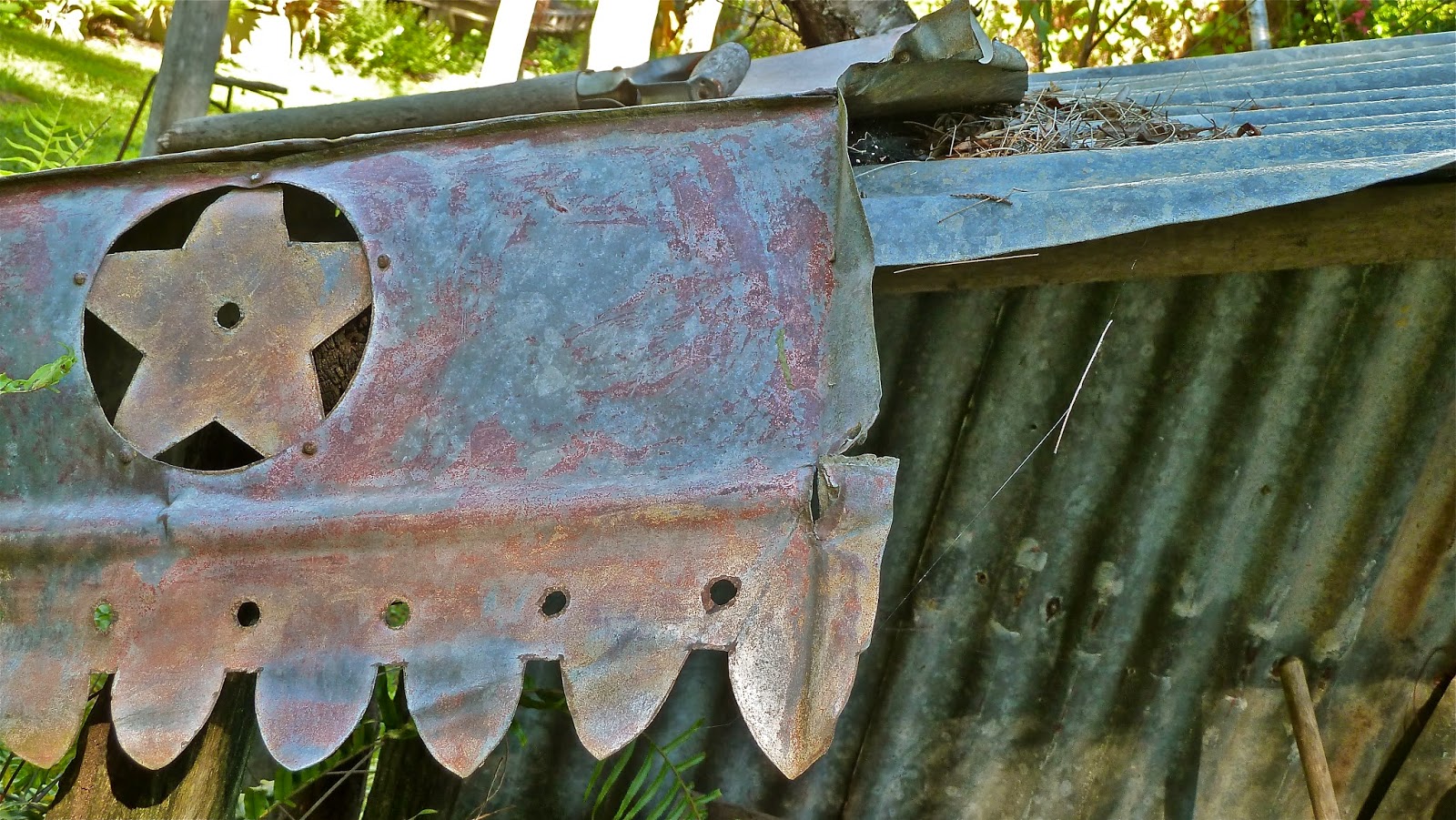
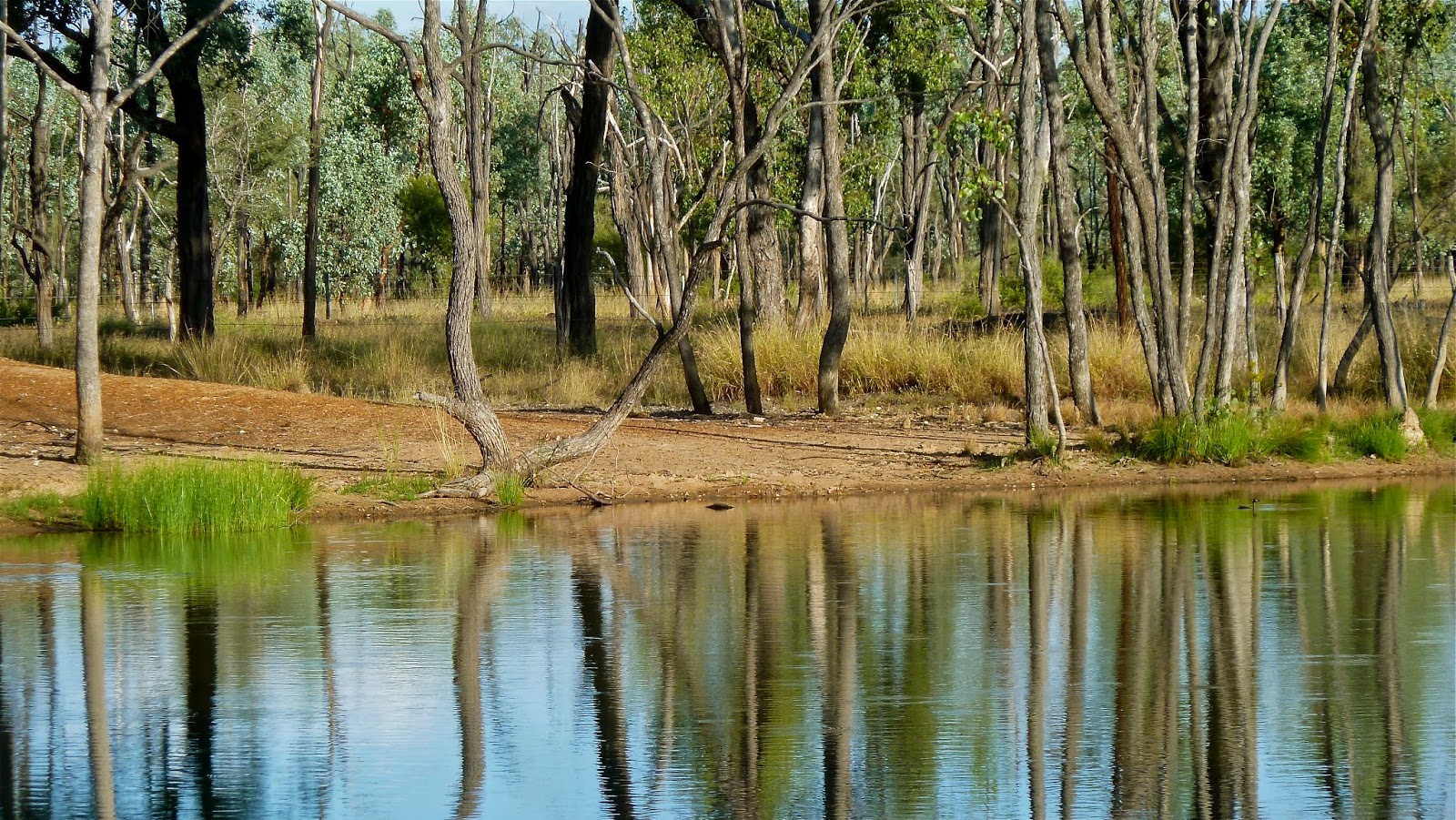
As I stole some precious time to wander around Penny's place alone with my camera, it was almost inconceivable that anyone could propose to excavate a pit, however lucrative, in place of the lush greenery and rural paraphernalia that caught my eye.


May 23, 2014

Galilee Road Trip: coal-free communities

It was hard to leave Bimblebox; for those who had made a pilgrimage; for those who had fully appreciated the price we are paying in the name of economic progress for Queensland. I wondered when on earth I would return.

Paola fortified us for the journey with delicious, comforting rice pudding. How could we thank her enough for the last two days? We also had to say goodbye to our friends from Mackay. Bus logistics meant I volunteered to ride in organiser Ellie's car instead: the convoy took a while to roll. Three brolgas took flight but I wasn't quick enough with the camera. The neighbour's cattle were just as bashful as those on Bimblebox, but the horses were bolder. We bade farewell to Alpha and hit the Capricorn Highway. I drove the Alpha-Emerald stint as we left the Desert Uplands behind us. The purply green Drummond Range was a beautiful contrast to red sandy plains, but I'll have to go back: a long day's drive precluded photo stops...
...Except beyond Emerald, where I became a 'coal tourist', according to one of my travelling companions. I have to confess to a sort of fascination with coal trains. I mean, they are unimaginably long: you can never see the beginning and the end at the same time; and they are usually described in terms of kilometre-length rather than number of wagons. They are so long they need locomotives in the middle. The wagons have arrows on them in case you can't work out which way they're going! In this case, east to Gladstone, full, or west to Blackwater and the Bowen Basin mines, empty. Whoever would have thought I'd become a train spotter. The driver tooted as I snapped.
Onwards and eastwards to Rockhampton, and then south on the Bruce Highway – with a brief stop at Mount Larcom for late-lunch potato wedges and fruit salad – then past Gladstone to Miriam Vale. Here we turned southeast down the Bundaberg-Lowmead Road to our final destination of the trip: Avondale, a small community on the Kolan River – but a coal mine and gasfield free community nonetheless. 

Not for the first time on this trip, I found it a bit daunting pitching up in a strange place in the dark, but there was the warmest welcome from the ladies waiting at Penny's place. The campers had a choice that night: their tent on a grassy sward close by Nunginungi homestead, or the Shed, a new construction a bit further away. The temperature was dropping and the air was damp, so it was not a difficult decision for me. 

The trippers and the locals congregated in the Shed before supper. We heard someone describe finding her 'home' in this beautiful, unspoilt part of the world north of Bundaberg, and about others' passion for the area's pristine water and fertile land. We learned of the first surreptitious signs in January 2013 of two coal companies making exploratory moves – just down the road from Penny's place and on a property down by the Kolan River – without so much as a by-your-leave. Beneath the lush farmland of Avondale lies the Maryborough Basin, and there was some excitement about 'a huge coal find'*.

We heard about residents' initial feelings – of disbelief, puzzlement, shock and distress. But the ladies who stood before us were smiling from ear to ear, confident about their decision to defend their community from unwanted development. Their positivity flowed from them and washed over us like a warm tropical wave.
In February last year, a handful of concerned Avondale locals organised a screening of Bimblebox and invited the indefatigable Annie Kia, Community Empowerment Coordinator for the Lock the Gate Alliance, to hold a workshop. Annie worked in the Northern Rivers area of New South Wales to develop a strategy for communities threatened by invasive gas fields (or coal mines), and believes that communities can make a positive difference to future outcomes by means of grassroots participation.

And so gradually there took shape a plan for the residents to lock their gates to the coal companies' geologists or any other representatives, and, if a majority of residents so desired, to declare their streets coal mine and gas field free. In January this year, Avondale and Winfield (on Baffle Creek to the north) declared themselves coal and gas free communities**. Their next goal is to get their own baseline testing done to enable them to prove contamination in future should the need arise. Last weekend they held a major – and successful – fundraising event in support of this aim ($10,000 of $70,000 raised so far).

Now six action groups are part of Coal Free Wide Bay, Burnett and Beyond Inc.

On the way over to the homestead we came upon a sluggish Red-bellied Black Snake who needed to be someplace warmer. It confirmed that my decision to sleep in the Shed was the right one. 

First we had a delicious buffet meal supplied by our hosts. The produce was locally grown, and it showed. The potato salad was simply the best. And the flavour of the chicken reminded me of what chicken should taste like. We chatted... and we danced... and it was going on midnight by the time I crept around bodies in the Shed and crawled into my sleeping bag. 

I awoke at six to beautiful country that I hadn't been able to appreciate the previous evening. There wasn't as yet any running water in the Shed so I washed my face in the abundant dew. The backlit grasses were magnificent and the birdsong extraordinary. Unfortunately, my bird expert was in a tent down the way.
View from a dunny
After breakfast and packing-up we had our final debrief of the Galilee Road Trip, in the Shed. What a journey it had been. Now, there was so much more to do. We walked slowly, if not a little sadly, back to the bus... and headed back to Brisbane.
This post was last edited on 24 May 2014


May 16, 2014

The Bentley effect

Yesterday brought the best news. New South Wales Energy Minister, Anthony Roberts, suspended Metgasco's Petroleum Exploration Licence to drill for gas on farmland near Bentley in the Northern Rivers area on advice from the Office of Coal Seam Gas (OCSG) that the company had failed to adequately consult the community. He also referred the company to ICAC (Independent Commission Against Corruption) 'following receipt of information concerning shareholdings and interests in Metgasco Limited'. Namely, a link between the company's largest shareholder and a relative of Eddie Obeid, the subject of current ICAC investigations.

There had been rumours for a week or more that up to 800 police (including riot police) were about to break up the protest by, at times, several thousand environmental protectors, some of whom have been encamped since January. I had, along with thousands of others, rung the offices of NSW Premier Mike Baird and the Minister for Police Stuart Ayres to seek reassurance that such a heavy-handed response would not happen. They couldn't give me that but they did report a large volume of calls. There was a buzz that thousands more supporters were travelling to New South Wales to swell Camp Liberty's numbers.

Metgasco has already drilled about 50 exploration wells in the area, but most of them are in coal seam deposits about 800 metres below the surface. At Bentley, however, the gas is in sandstone at least two kilometres down and would require fracking, with all its attendant woes.

The community's opposition to Megasco's plans for Bentley is based on a number of issues. Not wishing a beautiful valley with its mixed farming to be industrialised. Unease at the approval of the Rosella 'tight gas' well at Bentley prior to the final report of the New South Wales Safety Investigation Unit on an explosion last year at Metgasco's other unconventional gas well, Kingfisher. Having made plain their opposition to gas operations in the Northern Rivers since 2010 and then voted almost unanimously (87%) against CSG development in a Lismore Council commissioned poll in 2012, the people of Bentley felt their democratic rights were being trumped by the New South Wales government's commitment to mining.

Throughout the blockade and since the decision yesterday, the Bentley protectors received messages of support from all over Australia but also far beyond. Their peaceful, highly organised campaign has set an extraordinary example to all those engaged in similar struggles. The movement grew from face-to-face chats on doorsteps and over fences into an extensive collaborative network of people from many walks of life and different political persuasions who shared a common goal to protect their land, their health and their kids' future.

The Bentley community is now much more likely to unite with others to oppose CSG plans elsewhere in the Northern Rivers, for example at the aptly named Doubtful Creek near Kyogle, and in the state as a whole. And environmental protectors everywhere, as well as wearing grins as wide as Cheshire cats', got up this morning with a lot more hope and belief, and even perhaps a sneaky feeling that 15 May 2014 may well have been a turning point in the slow and steady march towards a more sustainable future for Australia.

Post script  On Friday the Australian Petroleum Production and Exploration Association (APPEA) issued the following media release, under the headline Damaging precedent for NSW resource development. It made me cross, although not enough to dispel the warm glow established by the news from Bentley.
Today's decision by the NSW Government to suspend the right of a petroleum exploration and production company, Metgasco, to drill an exploration well in northern NSW just days before commencement of drilling activity is of significant concern to the industry and sets a damaging precedent for resource development in that state. Investors should be concerned about what constitutes 'genuine effective consultation' in NSW. The industry is concerned that the presence of protestors at an operations site should not mean that genuine consultation with the community has been ineffective...
Protest action at his site is part of a well-organised and well-resourced strategy to stop energy development across Australia and it has included both illegal and threatening behaviour, including the placement of booby traps. Companies willing to invest tens of millions of dollars in projects to bolster the state's gas supply now face an uncertain future courtesy of a campaign by The Greens and extreme environmental groups to stop the productions of traditional energy sources.
With thanks to a Bentley protector for the photo (top)
This post was last edited on 27 May 2014


May 15, 2014

Bimblebox: pause for thoughts

We humans have reinvented God a dozen times in the past 5000 years... Yet divinity is accessible, free and indisputable, all around for all time, every day for everyone – with just one simple law. Nature is sacred. Soil, water, air and all that lives within. Unnecessary disruption is sacrilege. And here, you will know why, for nature still speaks – kindly but clearly – come close, listen to my story, treat me with reverence, and you will live and die well.
It's alone in the wilderness you can find this essential truth, rising above the morass of a troubled humanity that in contrast seems so lost in a contortion of endless fleeting words, exaggerated images, mixed messages, and fickle impulses.
To sacrifice a place that offers so much timeless priceless insight for 30 years' worth of dirty old coal is to lose that last hope for all of us.
Ian Hoch, co-owner of Bimblebox Nature Refuge* 
In the Land Court last year, Paola Cassoni, co-owner of Bimblebox, finished her submission with these words.
Finally, my last word is a tribute to our water.
As a prerequisite of life, water is hardly an optional extra or a luxury of personal choice. Loss of water, or significantly degraded water quality, isn't an inconvenience, it's the end game for the Desert Upland rural communities.
We treat water with reverence and grace. We don't over-extract, and we marvel that even in a year of drought like this one, water still comes to us in our bores, and we know we will be able to survive this dry landscape once again. But for those who have never been short of water, they can't understand our anxiety. We will be living our next 30 years or more, knowing huge voids will be continuously draining our precious water supplies.
By nature's good fortune, we are able to keep the bulk of our water conveniently stored away in shallow, life-giving arteries. With a water supply protected from the drying atmosphere, the Desert Uplands is a gift to the world and to the few who make it their home. 

* from Bimblebox: A Nature Refuge Under Siege, edited by Maureen Cooper (for details, see http://bimblebox.org/books)