January 30, 2014

Cor, Barney!

All most people wanted this Australia Day was for it not to be like the last one. Do you remember ex-Tropical Cyclone Oswald? It was rather less an 'ex' cyclone and more a category 2 in parts of Southeast Queensland and northern New South Wales, but it hadn't travelled over the ocean so weatherpeople couldn't call it a cyclone. The flooding resulting from it meant a ten-hour journey back to Brisbane for us, from Ballina.

In early October 2012, we intended to walk to the Lower Portals on Mt Barney at the end of a weekend exploring the Condamine gorge and Spicer's Gap in the Scenic Rim. A series of delays – including a hangover, the mistaken belief that you can still drive through that particular Gap, and getting lost back and beyond Lake Maroon – meant we reached Mt Barney at teatime, and in oppressive grey weather.

Last weekend we tried again, leaving Brisbane about half past nine on Saturday morning, in constant rain. It takes only about an hour and a half down the Mt Lindesay Highway to get to the Scenic Rim. We stopped in Beaudesert for a little look around. The coffee was good at ....bean to?, and we sat and watched the world of utes and trailers and horse transporters go by. And the weather was improving.

I love small-town shops. Do all good Queensland fashionistas know what Smoky Mountain boots are? Should I have picked up some pagan supplies for a friend?
Further down the Mt Lindesay Highway towards Rathdowney, we did what we like to do when there's no pressure to reach a destination: just turn off down some random road and explore. In this instance it was Kooralbyn Road. We found lots of birds on Boomerang Lake – including Red-kneed Dotterels which were new to us – roos and wallabies, and good views of the Scenic Rim. It's cropping and cattle country down here, and it looked lush following recent rain.
Whiptail Wallaby, aka Pretty-faced
Mt Barney National Park includes several impressive peaks – Maroon, May, Ballow, Ernest and Lindesay. Mt Barney itself is the second-highest mountain in southern Queensland (at 1359 metres; Mt Superbus in the Main Range to the west is 1375 metres), and has an East Peak and a West Peak, which is 3 metres higher. It is not an easy mountain to climb: all tracks are class 4 or 5. The easiest route to the top is via South Ridge: this is a class 5, and takes about 10 hours there and back for experienced, well-equipped bushwalkers. There are no constructed tracks and a lot of scrambling up rock faces and over rock slabs is required, so you need to be fit.

We chose the Upper Portals track. We mistakenly thought from the name that this might take us up the mountain (although not to the top). From the Boonah-Rathdowney Road, take Newman Road just west of Maroon, and then Waterfall Creek Road. Beyond the campsite there's a pretty arduous climb up to Cleared Ridge where the walk starts, but you need a 4WD because it's uneven, rocky and steep. Don't be put off by the landowner's impolite notices before you reach the National Park.
The Upper Portals track descends, in fact  – also very steeply in places. After 2 kilometres or so, it follows Yamahra Creek which flows into a boulder-strewn Mt Barney Creek. The walk there and back is 8 kilometres: it's supposed to take about three hours; but that doesn't take into account scrutinising every bug on the path and every bird in a tree.

We met no one along the way, which was great. Rather like in Carnarvon Gorge, the birds seemed to occupy their own zones: first were the Kookaburras; then the parrots – King, Crimson Rosellas (below) and Black Cockatoos; then tink-tinks (Bellbirds); and Red-browed Finches. There were also Currawongs, Fairy Wrens, Wagtails and another new one for our list, the Black-faced Monarch.
The standout wildlife feature on this day, however, was the number and variety of bugs we came across: four colours of butterfly; a black grasshopper-type; an extraordinarily shiny copper beetle that dazzled in sunlight; damsel and dragon flies; a bright turquoise bug; and an innocuous-looking flying thing that, believing itself to be under threat, displayed brilliant red and blue stripes*. We surprised a Monitor Lizard that quickly took to a tree trunk thinking we wouldn't see him there; and in Mt Barney Creek a shy freshwater crayfish** popped out intermittently to see what was what.
Much of the time we were buried in World Heritage Gondwana Rainforest, but the Cleared Ridge had more open dry sclerophyll (eucalypt) forest that revealed far-reaching views, and the forest opened up occasionally to casuarinas and banksias.
We stayed in Barney Creek (Vineyard) Cottages; specifically in the Hill Station, moved to this peaceful location and refurbished to resemble an old-style railway carriage. It had great views and some nice details; we could pre-order meals (the food was good and accompanied by local wine) so we didn't have to venture far if we didn't want to; and there was no mobile or internet coverage. I didn't know Stan Wawrinka had won the Australian Open Tennis final until 24 hours after the event.
I like Scenic Rim country. The original vegetation might be long gone, but there are gently rolling curves as well as craggy peaks; dilapidated, corrugated outhouses; and a pleasing mix of patchworked crops and beautiful brown cows.
On Monday there was more unfinished business to attend to. This time last year we tried to flee from Oswald by returning to Brisbane via an inland route, namely Kyogle and Lions Road into Queensland. Lions Road has many creek crossings and it was impassable following massive rain. This year, we decided to return home that way, in the opposite direction – and what an interesting journey it was.

The road is so-named because it was built by the Lions clubs of Kyogle and Beaudesert after requests for a connecting road through the Richmond Gap in the McPherson Range were turned down by the New South Wales government in 1969. The project inspired the communities which donated money and manpower. Linking shire roads in Gradys (NSW) and Running (QLD) creeks, Lions Road was opened at the end of 1970, and the last section sealed in 1995. Contributions towards its upkeep are still gratefully accepted on the border.
The contrast between the cleared land on the Queensland side of the border and the forest of New South Wales was marked.
 
A few kilometres down the road was the Border Loop Lookout. The Cougal Spiral railway links the two states through the Richmond Gap. To reduce the length of the tunnel beneath the border at the summit, the line circles back on itself by means of two short tunnels in a small hill, enabling it to climb 100 metres without progressing forwards, before reaching the border tunnel. Unfortunately there were no trains to be seen.
As we drove down towards the Summerland Way there were many creeks and rickety rackety bridges as the railway shadowed the road. Ultimately, we reached the crossing where we had been unable to proceed last year. It was shocking to realise how deep the water must have been: in the third picture below, taken from the other side, there is no sign of a bridge.
Similarly in Kyogle, we were surprised to see how far beneath the Barry McPaul Bridge the waters of Fawcetts Creek were: last year they lapped at the sides of the bridge, threatening to inundate the road.
Only one cafe in the high street was open this Australia Day, but that was all we needed: the coffee was good and strong and they sold my friend's favourite ice creams.

We left town on the Kyogle Road, climbing the Border Ranges towards Murwillumbah. Unable to resist further detours, we discovered a dark and brooding Lillian Rock. On the other side of the watershed, we picked up the Tweed River. At Terragon we turned left, where there was a turtle on the Tweed. We followed Byrrill Creek Road past secluded properties and through part of Wollumbin State Forest to Tyalgum. We were circling Mt Warning, but it remained true to its Aboriginal name, meaning cloud catcher, and I only caught the briefest of glimpses through low whispy cloud. It troubles me when I should be able to see Mt Warning but I cannot.
We headed back east following the Oxley River, through pretty country with intriguingly named places such as Dum Dum, Doon Doon and Dunbible. We skirted Murwillumbah through it western suburbs – if indeed it is large enough to have suburbs – and climbed up and over the state border once more. The road follows Currumbin Creek and the border, distinguished by a no man's land between a vermin fence on the Queensland side and another fence close by. From Tallebudgera you can't access the Pacific Highway at West Burleigh, please note. It flies overhead, so you have to turn back towards Reedy Creek, and the inevitability of Brisbane.

* a reader has informed me this is a Mountain Katydid, a bush cricket (or long-horned grasshopper)
** my friend tells me that this is most likely a Spiny Mountain Crayfish
This post was last edited on 11 February 2014


January 24, 2014

More drought

Source: Queensland Department of Agriculture, Farming and Fisheries
Queensland Premier Campbell Newman went to Longreach this week to look at the drought situation. He took Agriculture Minister John McVeigh with him and together they announced a further $22 million of Drought Relief Assistance, land rental rebates and support services (such as counselling) for drought-declared areas. Longreach and Barcaldine council areas were added to a list that now includes 26 affected areas and shires. Mr Newman said:
If this [drought] continues, if these funds aren't enough, the Government will be more forthcoming with more assistance down the track. The ultimate thing we all want is, of course, we'd love the weather to change. We'd love to see the black clouds build up and get a proper wet season. Let's pray that happens and we don't see another 12 months like this.
The mayor of Barcaldine, Rob Chandler, described just how tough it is for some graziers in the state's far west who received as little as 50 mm of rain last year and have little or no grass cover:
The stock are hanging on water. They are not out and about as they should be. They are really just hanging on the molasses trough and hanging on the lick troughs* and they are under extreme stress of 45-47-degree temperatures. It is very, very tough on the stock, especially this time of the year when they have baby calves on them.
A individual property can apply to the Department of Agriculture to be drought declared. They fill in forms that are submitted to a regional Climate Risk Coordinator for assessment. When drought conditions across an area or shire meet certain criteria, the Local Drought Committee recommend that the Minister of Agriculture declares that area or shire drought-stricken. Primary producers are then entitled to drought assistance from the state, which may include the establishment of water infrastructure for the provision of emergency supplies to improve animal welfare. The Federal government can make an EC (Exceptional Circumstance) declaration when a significant number of producers require assistance over and above normal risk-management procedures.

If you look at the map above, you'll see the southwestern corner of Queensland is not drought declared. This is Bulloo Shire. The area is very dry (150 mm of rainfall last year) and should be drought declared too, but it does not meet the requirement that properties have no livestock other than their own. Some properties have agistment cattle on them. At the end of the last drought, these graziers couldn't afford to restock and let other farmers' cattle use their pasture to earn a bit of extra income. The current drought is so extensive these cows can't go home, and they can't be sold because prices are so low.

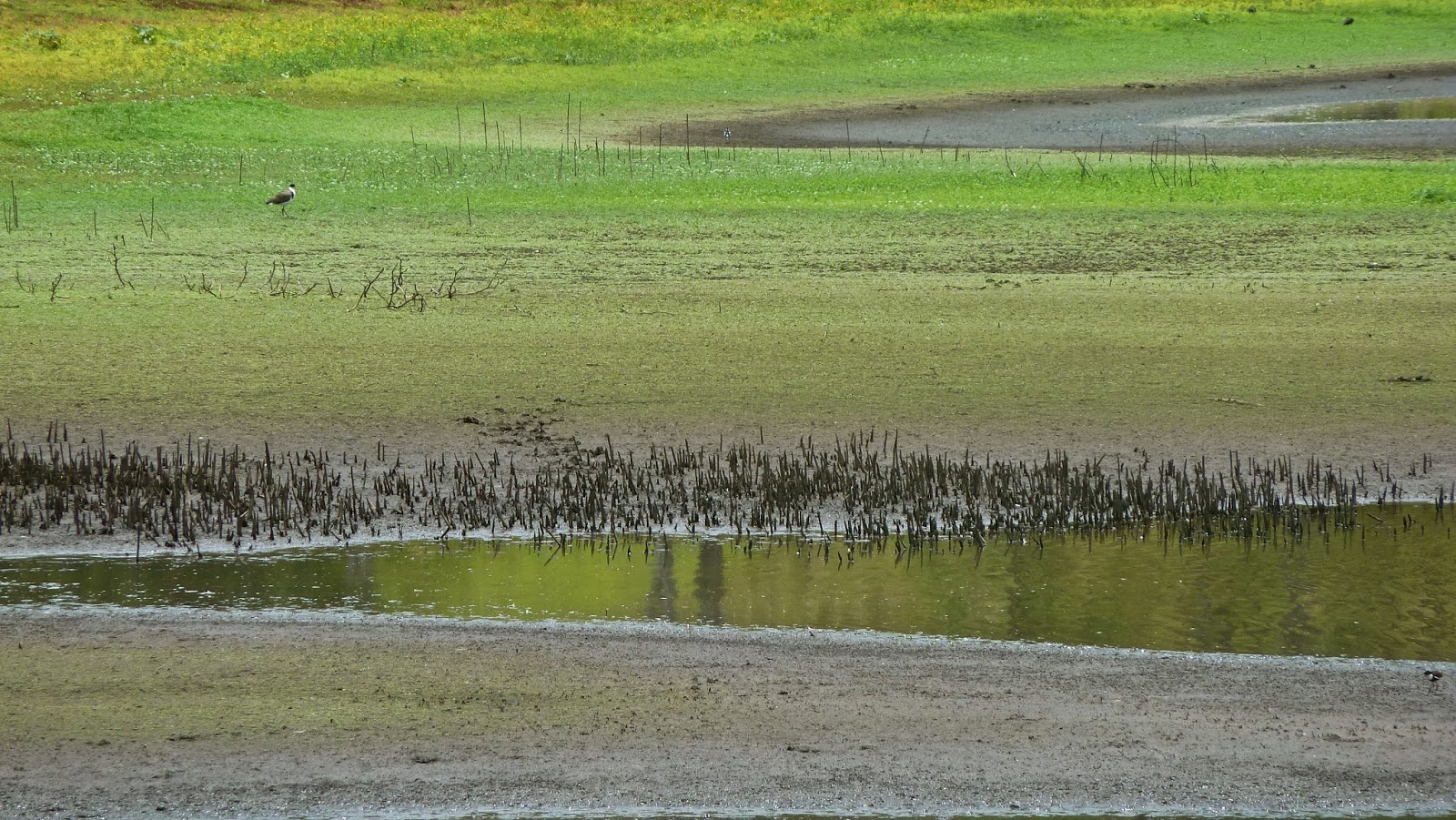
A rule is a rule, as we all know, but how about another exceptional circumstance: that the Federal or State Agriculture Minister uses a bit of gumption and declares the Bulloo drought-stricken in any case? This is how the shire looked last June: I imagine it's less green these days.
* a restricted feeding device that requires stock to lick their feed, resulting in less wastage from spillage and less feed being spoiled
This post was last edited on 11 March 2014


January 23, 2014

Teach your children

A few months ago I asked Brisbane City Council if they would plant a tree outside our house. There always used to be one, on the nature strip, but it did not survive the renovations. Council approved my request and, early one Sunday morning late in November, they planted a Tuckeroo sapling that I'd promised we would care for, by mulching and watering.

Little Tree, as it has come to be known, has flourished. A couple of weeks ago, my neighbours were seeing off some visitors who were parked alongside Little Tree. The children were loitering: their mother obviously wasn't saying goodbye fast enough, and the boy starting pulling Little Tree over by its leaves and letting go, so it sprang back. His sister pulled a couple of leaves off to pass the time. Ordinarily, I would have asked them to stop, but our neighbours are strange and I wished to avoid confrontation. 


Earlier this week, while walking in a local park, I watched in dismay as a young woman let two fast, powerful dogs chase two Masked Lapwings across the football pitch – twice. The park is not a dog off-leash area.


These incidents got me thinking about how we raise children with regard to the natural world. It's not rocket science, but I am frequently surprised that what I consider to be obvious, obviously isn't.


* There's a good reason for 'Don't feed the wildlife' signs – our food doesn't suit most animals – so don't do it. And don't set the precedent: 'Let's go and feed the ducks, roos, etc...'.

* Respect all living things. A bat is just as worthy as a koala, just not as cute... or as good at earning tourist dollars.
* Take home ALL your rubbish and belongings after picnicking, camping, swimming, fishing, sailing, sunbaking etc. Leave only your footprints, not your broken thongs.
* You don't have to have two dogs or more: one's just fine (working dogs in the bush being the exception). Multiple dogs in the city is not clever nor good for your carbon footprint†. Adopt a Phillip Island penguin instead*.
* Always keep your dog on a lead if there is any wildlife nearby, or the possibility that there might be. And keep your dog quiet, especially at night: if it's a yapper, bring it in from the yard.
* Go quietly. If you're walking in the bush or along the beach, remember that other people may be listening to birdsong, waves breaking or simply the silence. You'll never see animals if you crash about.
* If you're driving off road, respect the land and those who work and use it: leave gates as you find them; always watch out for animals, not just at dawn and dusk; never disturb seabirds resting on the shoreline; and don't even think about circle-turning on the sand or carving your name in wood or rock. Leaving your mark is not smart, it's dumb...

Above all, set an example of wonderment and celebration in biodiversity and landscape. Teach your children to see clearly, and to explore what they see; to value it and to question those who would exploit it for the gain of a few at the expense of the many. With a bit of luck we'll produce committed guardians of a planet under siege. 

A few weeks ago I read a piece in a magazine OneEarth, an online forum for thought and opinion about the environment. It is a long piece but I recommend you read it. It's the story of three people who paddled 92 miles down the Kobuk River through the boreal forest in arctic Alaska, and is an inspiring celebration of raw experience in a wild, wonderful place. A place that will be obliterated by mining and roads if the governor of Alaska has his way. In the face of madness, the writer concludes:
It's not so much that we are trying the save the beauty and efficacy of the natural world; rather, it saves us.
† http://theconversation.com/what-about-your-carbon-pawprint-9878
* https://penguinfoundation.org.au/donation/?newForm=1
** http://www.onearth.org/articles/2013/12/alaska-kobuk-valley-open-pit-mines


January 16, 2014

Drought

Last week it rained in parts of Queensland's Northwest, Central West and Channel Country, which made the news. Almost two-thirds of the state are currently drought-declared†. Unfortunately, the rainfall was sporadic: while the creeks on some properties are now carrying water for the first time in four years, other graziers looked up in vain at dark clouds that dissipated without delivering the goods.

For the second consecutive 'Wet', the monsoonal rains have failed over northern Queensland. Even last year farmers were doing it tough. A temporary live cattle export ban in 2011 and the subsequent introduction of ESCAS (Exporter Supply Chain Assurance Scheme) – which requires exporters to provide evidence of compliance with internationally agreed animal welfare standards and traceability and control along the supply chain – meant cattle exports to key Asian markets fell off dramatically. This produced a glut of cattle in the domestic market and prices collapsed. Exports were impacted by the high value of the Aussie dollar. Little rain meant a higher risk of bush fires in a region that had only just started to recover from the ravages of what has become known as the Millennium drought*.

Farmers have a reputation – rather like us Poms – for moaning, and those deaf to their complaints point out that drought is a common problem in Australia. This drought is so far-reaching, however, that agistment – whereby graziers move their stock temporarily to alternative pasture – hasn't been an option.

Queensland has a long history of raising cattle for beef, and is proud of its tradition. I still remember a steak I ate in the state's 'beef capital', Rockhampton, in June 2010. Right now, however, graziers in far western Queensland are shooting their animals because there is no food left for them. Anyone making a living off the land in Outback Australian has a hard life, especially during drought or flooding rains. People get used to killing ferals or putting wounded animals by the roadside out of their misery. But having to shoot many of your own starving cattle must be a particularly grim task.

Stock management is especially important in a business with marginal profitability. Some graziers foresaw difficulties ahead and destocked; stockpiling feedstuff is essential, if you can afford it. A National Drought Policy can establish a longer-term approach to the problem. But right now, farmers need water and food for their cattle. If your nearest neighbour is way beyond cooee and they're in just as dire straights as you are, it might help a bit if some kind strangers turned up to lend a hand and brought a truckload of hay with them. Those of us sitting pretty in the city can actually help with this. Buy a bale or two, or, if you're not working or you're retired, go and spend time in an extraordinary landscape doing whatever you can**.

Tragically, stories are emerging of farmers who, unable to sell stock in poor condition, have taken their own lives as well as those of their animals. Applying for a government farm finance package or the drought assistance measures currently in place may not be enough to help those who are struggling most. Federal Agriculture Minister Barnaby Joyce says there's no quick fix, especially as his government is reassessing the National Drought Policy, which could take up to a year. Queensland's Agriculture Minister John McVeigh encourages graziers to hang on in there: economists are predicting better beef prospects in the global market towards the end of the year.

Minister McVeigh has been touring the state's drought-affected areas, and on ABC Brisbane radio yesterday he declared that if there isn't a 'decent amount' of rain over the next month, there will be 'significant drought circumstances'. I would imagine many grazers in Queensland believe their circumstances have already reached the level of exceptional. In the absence of emergency feed drops or other rapid-result measures, however, we're all just have to keep rain dancing. And buying a bale or two.

† drought is defined by the Bureau of Meteorology as when rainfall during a three-month period is in the lowest decile of rainfall amounts previously recorded in the region
* this began in Queensland in 1991 but had spread to most of Australian by the mid-90s. By 2003 the drought was hailed as the worst on record. It continued throughout most of the noughties, only starting to ease in some areas in 2009
** see http://www.buyabale.com.au and http://aussiehelpers.org.au/aussie-helpers-who-lend-a-hand


January 10, 2014

The day we went to Maleny

Christmas was Brisbane-based this year, for the first time. We had family visiting from the UK and Victoria, and logistics dictated that most travel was going to consist of day trips.

In the second week of December I went for a pre-christmas treatment. The beautician was working flat out, she said. A lot of her clients are Melburnians and were getting spruced before returning home for Christmas. Other people have told me how relatively quiet it is in Brisbane at this time of year. The many expats in the city return whence they came to do familial festives, and natives escape summer in the city during the longest school hols of the year.

So I don't know who all those people were clogging up the highways every time we ventured out of the city. Progress was painful, actually. Especially the day we went to Maleny. The motorway was solid in places: I've never seen anything like it in four years of living in Queensland. We came off at Morayfield, thinking we'd take the back roads, and then crawled through endless sets of traffic lights on the road to Caloundra along with like-minds. We had to stop at Woodford for a garage snack to recover from the trauma. Just the four hours from Brisbane to Maleny. What a waste of half a day.

It was almost as bad the day we went to the Gold Coast. It's probably the last time I'll go there. I've really tried to understand why hundreds of thousands, if not millions, of people love the Gold Coast, but I just don't get it. We went to the wrong bit of the ocean side of The Spit, admittedly. It was the dog bit. With owners who don't understand why you don't want their lovable mutt sniffing round your sandwich, and can't control their hound well enough when you make it obvious you want it taken away. If you're forced to use a thong (flip-flop) to encourage it to leave, they get all huffy and call you 'tourists'. I watched one man trying to eat his lunch while three dogs, none of which was his, chased each other around him, kicking up sand into his food. Nice. The sand was grubby, and you never knew if you were going to come across a dog deposit: I spotted at least one woman burying rather than scooping.

The Spit separates Southport Broadwater from the ocean. People were packed on to the Broadwater side to such an extent that it reminded me of beaches in the South of France, where bullish Germans position their towels to within a few centimetres of yours. There was the constant background whine of jet skis: you know what a big fan I am of jet skis. There was litter by the roadside and oiks (bogans) in the car park. Where's the pleasure, I ask you? Gold Coast = far too many people = far too many cars and far too much concrete. No thanks. Bah humbug.

Here's a photo I took earlier... in 2011.
When we eventually arrived in Maleny, it was busy enough to make parking a convoy a tad difficult. Then the heavens opened. It was also problematical deciding among ten people which meal we were having at 2.30 pm, and which shops we should look at. After a while, we escaped to our isolated retreat – nine kilometres down a dirt road west of Mapleton, overlooking the Obi Obi valley – where we were spending the night. With hindsight, after a visit the next day, most of our party preferred Montville to Maleny. (Tour guide take note.)
Our evening and morning in a haven of peace and tranquility bordering Mapleton National Park was an experience we all wished to continue. Imagine my horror upon learning when we were back in Bris that there is a plan for a zipline somewhere in the Obi. The precise details are subject to commercial confidentiality – of course – but it would 'combine natural tranquility with the adrenalin of sliding above and through a pristine natural environment', which seems something of a contradiction in terms to me.  

I was reminded of the Dismal Swamp in the Tarkine of northwest Tasmania, where a blackwood forest sinkhole provides a unique, other-worldly environment. The peace is shattered by the screams of people shooting down a covered slide to the forest floor. An extraordinary natural phenomena has had to be augmented by an 'adventure' in order to attract more visitors, which is what they're trying to achieve in the Sunshine Coast hinterland, too.

The days we went to Bribie were the best in many ways. We witnessed the wonderful and the weird about the Aussies. The first day – off-road in the National Park – neither driver engaged brain about driving in soft sand and we soon got bogged, as they say here, even though it was dry as a bone. Almost immediately two guys came up and offered to pull us out. There is a lot to be learned in a situation like this, so if it happens to you, pay attention and heed the experts. Most importantly, if you're a beginner, don't be proud or over-confident and think you can do it alone.

The next visit was in the new year. What a way to spend New Year's Day, eh? Momentarily, I forgot how strange it seems, still, to be christmassy and new-yeary in very hot sunny weather, and just got on with beaching. It was fairly busy, by Woorim Surf Beach standards, and we walked a fair way – in the dog bit I might add – to get away from people. We were soon joined by others, who could easily have walked a little bit further still, but obviously wanted to be with us. I never understand people who'd rather sit virtually on top of someone else than be on their own. What's that about? The best example of this odd behaviour was a group who joined us after lunch. Firstly, they put their stuff right next to a pile of rubbish left by previous beach-goers, and then they set up their game of sticks practically in front of us. There was masses of room elsewhere and the tide was out. Funny people. It's a good job they weren't kicking a ball around that close to us: my christmas spirit might have evaporated PDQ.
It wouldn't do for us all to be the same, would it?

On other days we promenaded on the Bay at Wynnum; sweltered on South Bank on one of the hottest days ever; cycled along the river to the Botanic Gardens, where we searched in vain for a Carpet Python; walked around the summit of Mt Coot-tha; viewed from lookouts along the Springbrook plateau; and marvelled at Natural Bridge.
Our next guests arrive in a couple of months. There are obviously quite a lot of excursions around Brisbane to entertain them. But let's hope we can avoid a repeat of the day we went to Maleny.


January 7, 2014

Gladstone revisited

I knew I would have to return to Gladstone. Not literally, of course. When I wrote about it before (The trouble with Gladstone, June 2012), a lady who lives there got very upset about several things: I confused aluminium smelting with refining (bad journo), and my impressions of the town were based on too little experience (probably true). But she mistakenly assumed I was slagging the place off – slag heaps, get it? – whereas in fact I was concerned about the effects of harbour activities on wildlife and the livelihoods of those dependent upon that wildlife.

Eighteen months on and the National Parks Association of Queensland is asking people to contact the CEO of the Great Barrier Reef Marine Park Authority (GBRMPA), Russell Reichelt*, asking him to refuse a request from the North Queensland Bulk Ports Corporation – the company doing the dredging of the Abbot Point coal terminal – to dump 3 million cubic metres of dredge spoil into the Marine Park, as part of the expansion plans for the port. The National Parks Association say the alternative is to dump the spoil on land. The answer, surely, is not to dredge.

The Authority had been due to make their decision just before Christmas, but postponed it until 31 January – so you have plenty of time to make your views knows to Mr Reichelt. They have delayed their decision so further tests can be carried out on the protective lining of bund walls. This follows dredge spoil leakages in 2011 and 2012 into the Harbour, and the implications thereof for dredging in Queensland in the future. We've only just found out about the leaks, you see.

Environment Minister Greg Hunt approved the Abbot Point coal terminal expansion at Bowen late on 10 December. He announces bad news late in the day I have noticed, presumably in an attempt to diffuse the outcry that inevitably follows as he abrogates his responsibility for the protection of the Australian environment. On this particular occasion he also gave the go-ahead to Arrow Energy's liquified natural gas plant on Curtis Island and a connecting transmission pipe. Which brings me back to Gladstone.

The so-called environmental movement includes many activists affiliated to lobby groups or single-purpose action groups, but there are many individuals who labour away, writing blogs or emailing ministers in an attempt to influence the legislative process to protect communities – of people impacted by mines or of animals at risk of habitat loss – or simply to establish the truth.

John Mikkelsen is a ex-journo and  former editor of the The Gladstone Observer. Since 2011 he has been trying to bring the water-quality problems of Gladstone Harbour to the attention of the mainstream media and hence government. By the end of last year, The Australian was finally asking questions of the Port Authority who, it would appear, failed to reveal toxic leakage back in 2011, instead blaming the great flood of January that year for the sick fish. One wonders if they kept it quiet from local and state government also, not just the media. There are some relevant links below**.

When approvals are granted for mines or port development they are accompanied by a raft of conditions intended to protect vulnerable ecosystems. The lists of recommendations are doubtless well-intentioned, but their efficacy will be reduced if they are not accompanied by adequate monitoring mechanisms. The Gladstone Port Authority knows full well it's not supposed to release the toxic components of dredged material into waters in which fishers fish and children frolic, but who monitors their practices and how frequently? How are environmental breaches detected and solutions put into place quickly in order to prevent an ecological disaster?

Would the GBRMPA currently be deliberating if it wasn't for the determination of an old journo who got fed up with walking his dog past dead dolphins? Shouldn't stringent enforcement have revealed the problem long before? The bund lining that caused the leak was actually on the wrong side of the wall. Shouldn't the construction have been checked and checked again? And inspected regularly so that some idiot might have finally noticed that it was an accident waiting to happen? Have heads rolled since? Will further dredging be put on hold until a full enquiry has determined the truth and made the necessary recommendations? Unfortunately, I doubt it.

* Russell.reichelt@gbrmpa.gov.au
** http://www.abc.net.au/unleashed/3604724.html
       http://www.brisbanetimes.com.au/environment/gladstone-harbour-bund-wall-failures-explained-20131220-2zr0r.html
     http://www.gladstoneobserver.com.au/news/environment-minister-seeks-urgent-review-bund-wall/2125101/


January 4, 2014

The hottest day yet

At 1.20 pm today it was 38.7 degrees according to the Bureau of Meteorology's observations for Brisbane. They had predicted a high of 41, but I don't reckon it will get any hotter than this. There may have been a change in wind direction; it's quite breezy, which will help.

This is the hottest it's been since we moved to Brisbane four years ago, but it is not a record-breaker. Records are being broken in the state's interior, however. Where we stayed near Thargomindah on our Outback trip in June, it reached 49 on Thursday.

Many temperature records fell in 2013. Last Friday, BOM issued its annual climate statement for the year. 2013 was Australia's warmest year on record. From a global perspective, 2013 was the sixth warmest on record. It's essential reading if you want the facts about weather trends rather than deniers' dangerous propaganda: http://www.bom.gov.au/climate/current/annual/aus/2013/

I can't help feeling that this is what many Australians are going to have to get used to over the next few decades, and worse if nothing is done soon to reduce global carbon emissions. Unfortunately Australia has a right-wing government that steadfastly clings to the idea that planting a few trees will be enough of a response to a change in the climate that they have yet to acknowledge is directly affected by their citizens' lifestyle demands. The Greens have called Prime Minister Tony Abbott 'a reckless ideologue who ignores the science' in response to BOM's report.

Unlike probably most of the citizens of Brisbane, today is the first day we have used air conditioning this summer. We didn't use it last summer, and possibly only for an hour or so the summer before that. We believe it is for when the heat becomes seriously debilitating; not merely to maintain one's ideal temperature, or instead of opening a few windows and doors to create a usually perfectly adequate through-draught.

Today the heat was making me cranky by mid-afternoon. You have to keep drinking because you're sweating so much (humidity was 63 per cent) you would soon dehydrate otherwise. You can't have a cold shower: the cold water supply is warm, probably because the pipes are too near the surface. Ice cubes last barely a couple of minutes. All surfaces and floors are warm to the touch. Cleansing balm becomes liquid. The aircon is struggling because the house isn't insulated and windows and doors are ill-fitting; numerous windows and fandangled metal louvres permit a merciless sun to slow-cook those inside. I can't imagine the discomfort of 10 degrees further up the scale.

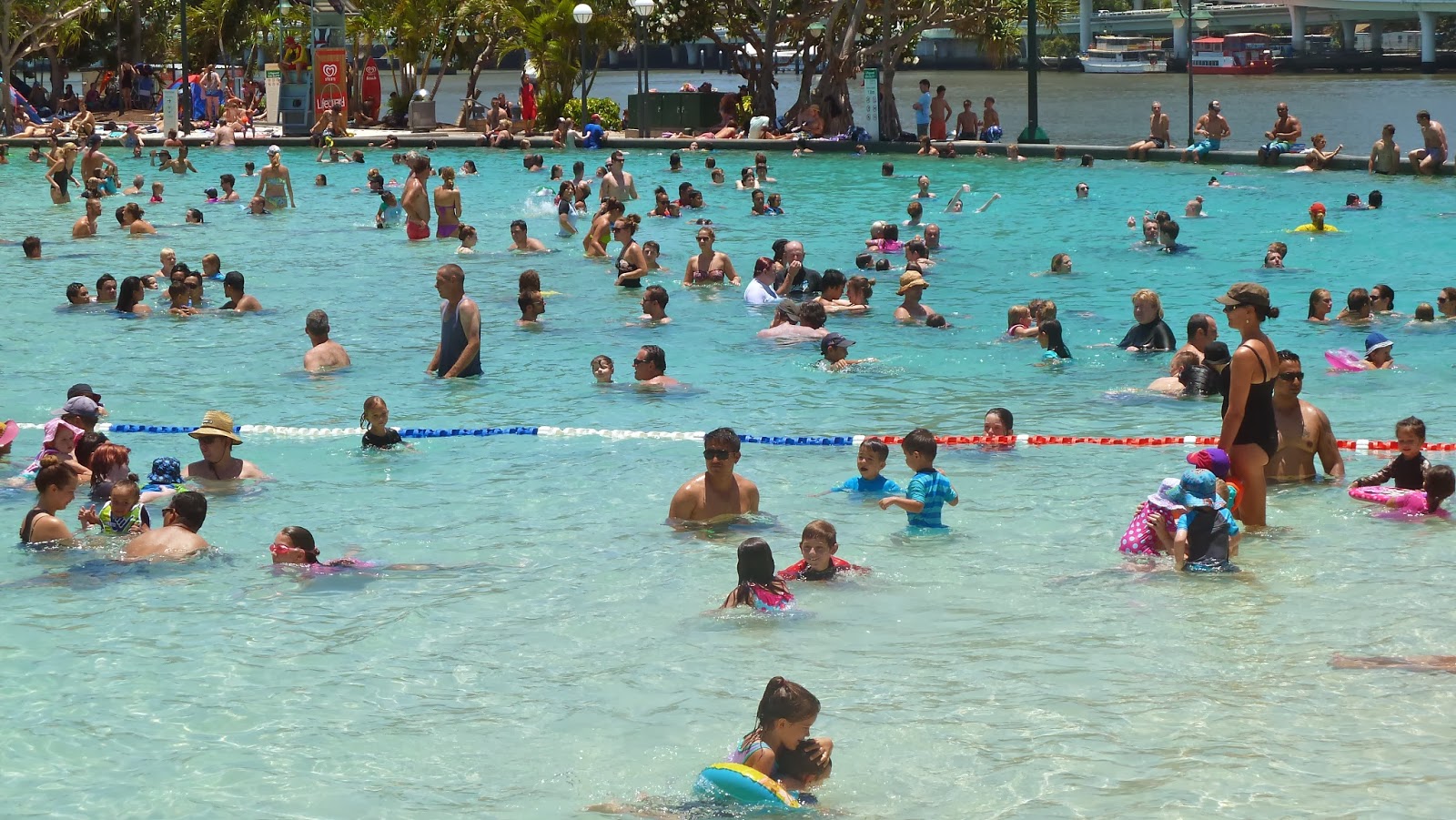
On hot days Queenslanders head for water. In Brisbane, they mass on Streets Beach at South Bank. But that's more my idea of hell than my hothouse right now.