On the key plan of any Europe-centred atlas, you'll find New Zealand slipping off the bottom right-hand corner, elongated and not quite right. I realised this when I returned from my first visit to to these isolated Antipodean islands and needed to compare the latitudes of familiar wine regions of France and other Mediterranean wine-producers with those of Marlborough, and of temperate northern climes with that of South Island.
In the mid-90s I worked on a reputable wine book (for a well-known French publisher) being produced in a house in Kingston-upon-Thames (southwest of London). We were obviously including New Zealand's lauded wines, but while we were doing so the editor-in-chief's parents were touring NZ and regularly sending postcards from the edge. The landscape defied description of its beauty. One day I had to see it for myself.
My ultimate aim is to tour both North and South islands, a plan aided and abetted years ago by a dear friend from Dunedin with whom I worked in another London publishing house. She told me of tramping tracks and glaciers and wild, wild vistas to take your breath away and transform photo ops into obligatory reportage. This visit was a starter trip, however. A taster by way of a special (Christmas) treat; lots of relaxation and communing with some truly extraordinary nature.
Our base was Kaikoura, a two-and-a-half-hour drive on State Highway 1 north of Christchurch. New Zealand's second-largest city suffered yet more earth tremors* – in fact, a clutch of 5+ serious shakes – on the morning of our departure. Jetstar saw fit to cancel our flight and jeopardise our entire trip, but that's another story. We made it 24 hours later, arriving in the early hours of Christmas morning. The star-spangled heavens were a wondrous sight at 2.30 am.
Kaikoura is blessed with a spectacular mountain backdrop and a wealth of wildlife delights. The town nestles along the northern sweep of a limestone peninsula jutting into the Pacific. The continental shelf plunges into the 1,300-metre-deep Kaikoura Canyon not far offshore. It's a 'biomass hotspot', and the riches of upwelling water attract many sea mammals as well as birds and fish.

Maori legend tells that a demigod, Maui, placed himself upon the Peninsula and fished New Zealand's North Island from the ocean depths. Maori settled the Kaikoura region 700-800 years before Captain Cook sailed by in the 1770s. Europeans came and began whaling in 1842, a practice that continued until the 1920s**. After that the town turned to farming and crayfish-harvesting until the 1980s, when tourism took off. Despite lots of visitors, the town retains an unhurried, peaceable, almost bygone feel.

We knew little of this beforehand: we came here because Hapuku Lodge & Tree Houses looked like our kind of place. When I drew back the curtains of our smart suite a few hours after our mid-night arrival, I could barely contain my excitement. And grabbed the camera.


About 12km north of Kaikoura, Hapuku Lodge sits at the foot of the Seaward Kaikoura Range and within a large stone's-throw of the ocean. There's wow-factor in every direction.


It's hard to imagine a lovelier location in which to marvel at stunning as well as stylish surroundings. There's a pool with a view; custom-designed wooden furniture; lush native plants and endless catchy birdsong; a deer paddock; cool marble tiling; huge beds with the softest merino and possum-fur blankets (it gets chilly at night); big stripy pots and Middle Eastern and Indian rugs; delicious food (including homemade olive oil, cute little sweet and savoury scones and home-grown Gewürztraminer); rainforest showers and deep soaking tubs; and warm-and-friendly staff who cater to needs in the least obtrusive way.


The concept of Hapuku Lodge grew out of a deer farm† established in the early 1990s. Construction began in 2000 and the Lodge opened three years later, slow progress resulting from the high-quality spec, environmental considerations and a devastating big wind. A big attraction are Hapuku's five tree houses perched above a native Manuka (tea tree) grove. Ten metres above the ground, these were added in 2006 to capture the imagination – and not just of young visitors. Unfortunately we didn't get to stay in one of these this time, but we loved our spacious more-like-an apartment-than-a-room in the main lodge (a huge advantage in inclement weather).
All accommodation is finished to the sort of level you'd choose for your own home if you earned enough dosh. The woodworks are probably the best thing, but I even liked most of the art. Attention to detail is key – coffee beans, grinder and plunger in our kitchen area, a little bottle of fresh milk and homemade chocolate-chip cookies supplied every day, and large bottles of lovely bath products, not silly little samples.
Even more than beautiful embellishments, comfort and joy in just about everything around us, we appreciated Hapuku's green credentials. Food in the restaurant is locally sourced (including from their own organic kitchen garden) and all wines are New Zealand; the timber used in construction and furnishing was responsibly sourced and much of the imported wood was recycled; all rooms are well insulated and double-glazed; thousands of native plants and trees have been planted in the grounds to maintain local species, attract birds, and act as a carbon sink; and all kitchen waste is composted. The Lodge aims to 'reduce, recycle and compost', and constantly reviews day-to-day operations with this mind. Their initial goal is to be 75 per cent waste free, but ultimately 100 per cent.
The town of Kaikoura recently gained Earthcheck Gold Community Certification following its efforts at community sustainability††. There appears to be a genuine desire in this spectacular part of the world to make New Zealand tourism sustainable, which is commendable. Lessons to be learned closer to home, I think.
Kaikoura district is part of the Canterbury region of South Island. It is a great destination for wilderness walks through dramatic landscapes; for encounters with whales, seals, dolphins, albatrosses and more; and for fishing, kayaking, river rafting, skydiving, llama trekking, stargazing, surfing and paddle boarding. It's within easy striking distance (about an hour and a half's drive) of some of the best wines in the world, in Marlborough; and there's Maori history and culture to study. Or you can just look at and chill in a beautiful place. We only had a week; I wish it had been more.
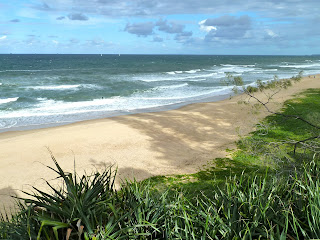
Our first full day was Christmas Day, and Hapuku Lodge was providing Christmas dinner for its guests that evening. It was warm and sunny and we explored our immediate vicinity, by walking along the stop bank beyond the tree houses down to the broad river bed of the Hapuku River, and following its stoney course down to the beach. Being an adoptive Aussie gal, I'm a bit beach-obsessive. (I probably always have been.) So I have to confess to being a tad disappointed by the beaches along this stretch of New Zealand coast: forget soft pale sand, right? I was soon distracted, however, by a seagull spa in the freshwater at the river mouth,

a wall of fish (Kahawai) in the waves,

a million seabirds fishing (Shearwaters, we think)
 dramatic beach detritus, presumably washed down by the Hapuku in flood

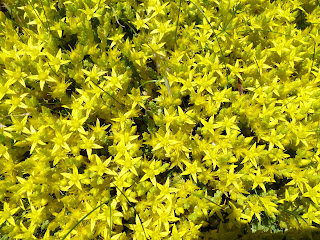
…wildflowers in abundance

and, of course, the stunning mountain backdrop.

We had no map and stumbled our way back to Hapuku Lodge with a little help from some neighbours whose Christmas Day celebrations I crashed to ask for directions. They offered me a beer! I like this country.


Then it was back to get ready for Christmas dinner, toast our good fortune and plan our explorations.

* Christchurch suffered a 7.1 magnitude earthquake on 4 September 2010. There was widespread damage, especially in the CBD, but only two serious injuries and one death. Thousands of aftershocks have occurred since, one of them, on 22 February 2011 and of magnitude 6.3, causing 181 deaths (115 of them in the Canterbury Television building alone) and considerable further damage to buildings and infrastructure weakened by the 2010 event. (Some seismologists consider the February quake a separate event since it occurred on a different fault system.) More strong aftershocks occurred from May until October, and continue into 2012, following shocks of magnitude 5-6 on 23 and 24 December
** Maoris did not hunt whales. If one happened to beach and perish, then they would make use of every bit of it, but a whale was considered a gift
† For venison, antler velvet (used in traditional Chinese medicine and other health remedies, most recently for growth stimulants) and trophies (the size, structure and symmetry of antlers determine their trophy potential)
This post was last updated on 15 January 2012