December 8, 2010

Best botanics

Some of Australia's state capitals believe their botanic gardens are better than anyone else's. So Melbourne thinks its gardens are superior to Sydney's, for example. I will always be fond of Sydney's (above) because on my very first full day in Australia, I walked round from Circular Quay, past the Opera House and into the Royal (no less) Botanic Gardens: it was a beautiful morning and I was impressed. But I also quite liked Perth's (below). I love the more-than-glimpses of steel, concrete and glass through trees.

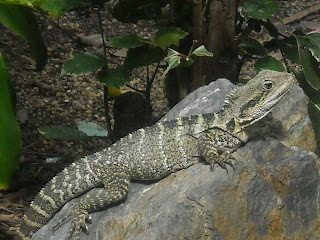
I've wandered through the Brisbane's City Botanic Gardens many times. We went there on our very first day here, the 2nd of January, 2010. The first thing to catch my eye then was a splendid grey-green fan palm, shortly followed a well-disguised Monitor Lizard.


I remember feeling other-worldly: meantime, my feet were being bitten by sand flies, or mozzies; I never did find out which.

Since then, we've often cycled through the gardens on our way along the north shore of the Brisbane River. A few weeks ago we took a flask of tea and Tim Tams to enjoy the gardens on a sun-day afternoon.


The City Botanic Gardens nestle inside a wide loop of the Brisbane River. If you're travelling upstream, they present a tranquil green contrast to the concrete hurly-burly of the Captain Cook and other bridges and the roller-coaster Riverside Expressway; and a foil to the high-rising CBD.


These 'heritage gardens' are the city's original botanic gardens. Six acres of 'botanical reserve', a sort of experimental farm garden, were established in 1855 under the care of botanist Walter Hill to identify suitable crops (including cotton and sugarcane) for the Moreton Bay penal settlement, which had been founded 30 years before. He didn't overlook the recreational aspect of a garden and added some ornamental plants. In 1865-66 the garden was extended to about 40 acres and included an area known as Queen's Garden, hence the sign on the Alice Street entrance (George Bowen was Queensland's first Governor).

The Botanic Gardens were flooded eight times between 1870 and the devastating flood of 1974. The subsequent loss of plants led Brisbane Council to establish additional gardens in 1976, the so-called 'discovery gardens' at the foot of Mt Coot-tha west of the city (see More botanics, March 2011). But many fine old trees survived the deluge in the City Gardens, some of them dating from Brisbane's foundation. These include the Bunya pines planted by Hill along the river, and Banyan figs, natives of India that were planted in the 1870s and have since produced spectacular curtains of aerial roots.

Some of these, by Alice Street, remind me of a prisoner's hand reaching through the bars of his cell.

There are wide-open sweeping lawns and tucked away, secluded dells; ponds and riverside; spaces in which to play with friends and hideaways from city work stations; the gardens provide a green break, a breather, a sanctuary. Other features include a rainforest, a bamboo grove and a mangrove boardwalk.

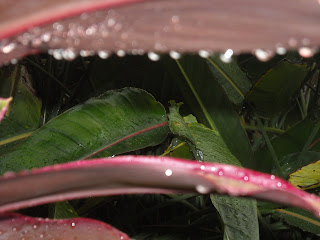
A few days ago, I fancied a cooling respite from shopping in the city. I wandered round the gardens wherever my eyes led me. I was struck by three essential elements: colour, texture and the juxtaposition of foliage. This is what I saw:
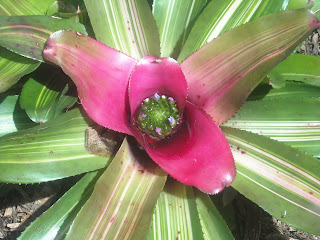

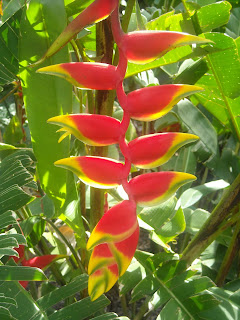


I particularly enjoyed the backlighting effects as the sun dipped lower.


And I came across an old friend.

December 5, 2010

My kind of place name

I love Australian place names. I love their obviousness (Four Mile Creek; Great Sandy Desert; Ocean Beach; Point Lookout); their conceptualization (Cape Upstart); their wackiness (Monkey Mia, a dolphin resort); their Aboriginality (from Belongil to Warrego); and their mystique (D'Entrecasteaux).

Some names I just like: Conspicuous Beach, Dee Why, Esperance, You Yangs, Nullarbor Plain, Yallingup, Peaceful Bay, Seventeen Seventy, Little Wategos, Kings Canyon, Valley of the Giants, Mandalay, Mt Sorrow, Cape Flattery, Indented Head.

As the rain continued to fall out of the sky in Brisbane this morning, I was reading about towns across central New South Wales on flood alert, for the third time this year. Some of their names – Gumly Gumly, North Wagga Wagga and East Wagga Wagga – reminded me of the lists of place names I've been compiling since I got here.

You can find lots of place-name lists on the internet: some amusing; some dripping with innuendo; and others just plain weird. I have five different categories of names that have appealed to me while travelling or researching or looking at maps: Experience; Bzzz Repetition; Silly; Forenames; and Too Many 'O's. Some place names qualify for more than one category: one of them qualifies for three.

Experience includes those place names that reflect explorers' (principally Captain Cook's) or settlers' adventures.
Cape Tribulation
Deception Bay
Mt Blowhard
Dead Horse Gap
Downfall Creek
Rushcutters Bay
Anxious Bay
Cape Grim
Mt Surprise
Avoid Bay, which is next to
Coffin Bay
Bald Rock
Mt Warning
Quart Pot Creek
Broken Hill
Murdering Point
Fog Bay
Lake Disappointment

The Bzzz Repetition category represents a very Australian phenomenon. There is an obvious crossover with Silly.
Wagga Wagga (pronounced Wogga Wogga)
Walla Walla
Whian Whian
Way Way
Kurri Kurri
Millaa Millaa
Wujal Wujal
Booti Booti
Boonoo Boonoo (three-category contender and joint
winner of Too Many 'O's category)
Goonoo Goonoo
Bli Bli
Bungle Bungle
Bongil Bongil
Curl Curl
Doon Doon
Gin Gin


The Silly category knows no bounds. There is an argument for a sub-group, Too Complicated (aka How the Hell Do You Pronounce It?).
Jimboomba
Mt Superbus
Goondiwindi
Injune
Upper Swan
Never Never
Useless Loop
Woodenbong
Gobbagombalin
Thargomindah
Mullumbimby
Murwillumbah
Coochiemudlo
Kinkawooka
Tumbarumba
Ulladulla
Humpty Doo
Mukinbudin
Banana
Durdidwarrah
Winkipop
Goodi Goodi South
Coffee Camp
Mt Nameless

Forenames speaks for itself: girls' names are obviously more popular than boys'.
Elizabeth
Alexandra
Gregory
Laura
Millicent
Mary Kathleen (ghost towns do qualify)
Sydney
Katherine
Erica
Keith (love it!)
Beverley
Theodore
Marian
Lucinda
Clare
Maria
Rowena
Augusta
Margaret (River)
Alice (Springs)
Agnes (Water)
(Mount) Isa
Anna (Bay)
Julia (Creek)
(Port) Arthur
Bruce (Rock)
Emma (Gorge)
Miriam (Vale)
(Port) Douglas
Mount Martha
The Olgas
Tom Price
(I know this is bending the rules, but I know a Tom Price, and you can imagine how conversations might go, can't you:
Where do you live?
Tom Price.
No, where do you live?)
Kitty Miller (Bay)

Last, but by no means least, is Too Many 'O's (or, very, very occasionally, consonants or other vowels).
Oonoonba
Oondooroo
Orroroo
Woolloongabba
Wooroonooram
Woolloomooloo (joint winner)
Borroloola
Indooroopilly
Mooloolaba
Cooloola
Koomooloo
Cobboboonee
Biddaddaba
Capalaba
Baralaba
Dululu

While some of these names seem overly complicated, others are almost startlingly simple. While driving through outback northern Queensland a few months ago, we didn't even realise we'd been to The Lynd (Junction) until we saw this sign pointing back where we'd come from.

On occasion, these names really come into their own. The other day, while listening to the weather forecast (an otherwise futile pastime in this part of the world), there was a strong wind warning for Point Danger. How apposite.

ABC Queensland have a wonderful weather presenter called Jenny. She rattles off lists of names – be they towns, rivers or promontories – like a true pro (it brings back fond memories of the shipping forecast on the BBC when I was a little girl). I have no idea where most of the places are – and she's only covering Queensland. Often I can't even see the names on the map because we've already moved on. One place I have grown to love is Weipa (pronounced Weepah).

Weipa is a town about three-quarters of the way up the pointy bit at the top of Queensland. It is the largest place on the pointy bit, with about 2,800 people (in 2006), and apparently exists because of large bauxite deposits nearby. On the Gulf of Carpentaria coast, it is close to the first official European sighting of this continent – Duyfken Point just to the north of the town. The Dutch explorer Willem Janszoon landed in 1606 – although he believed he was in New Guinea – more than 160 years before Captain Cook sailed up the east coast of Australia. Jenny pronounces Weipa as though it has an 'h' after the 'W', she says it with such gusto. It's thanks to her that Weipa is on my map.

Finally, I must confess to struggling with one aspect of Australian naming: similarity. After 11 months, I only just feel confident enough to distinguish between Toowong, Toowoomba and Toombul, all of them in or near Brisbane. Inexplicably, I struggle with Ballina and Ballarat, even though they're in different states. I am truly in awe of Jenny.

Photograph of Coochiemudlo Island sign courtesy of Olivia Forsey

This post was last updated on 24 September 2012


December 2, 2010

Sodden Brisbane


As I've explained before, the Australians don't use equinoxes and solstices to delimit their seasons. Yesterday was the first day of summer, and with it came the BOMshell (Bureau of Meteorology) that Queensland has had its wettest spring on record. As if to prove the point, rain dropped out of the sky from mid-morning, without ceasing, until bedtime. It was the kind of rain in which you see no birds and hear no birdsong; barefoot children wade home from school; and you take your life in your hands more than usual on the roads.

Today looks as if it will be much the same. But every cloud... presents another photo opportunity.


And from the deluge springs life...


...even if they had to abandon filming Mad Max 4: Fury Road a few months back at Broken Hill in the far west of outback New South Wales because the desert had bloomed after exceptional rainfall. The Sydney Morning Herald quoted Hugh Gough, of the Caledonian B&B in the town famous for silver, sunsets and The Adventures of Priscilla, Queen of the Desert: 'You can't kick up any dust, it's too green and moist and they need dry and dusty.' Filming has now been abandoned until 2012, and there have been rumours that the production is seeking an alternative dust bowl elsewhere.

This record-breaking rain may well reflect the cyclical rhythms of the SOI (Southern Oscillation Index), which measures seasonal fluctuations in atmospheric pressure levels between Tahiti and Darwin. (Negative values indicate El Niño 'episodes'; positive indicate La Niña episodes – see also A bigger wet, October 2010.) But in addition, it is surely one more piece of evidence of anthropogenic global climate mess-up.

On days like yesterday, when the oppressive gloom and watery curtain beyond every window imprisons you, body and mind, I now know to watch for almost imperceptible changes of light. It happened the other week. The grey flagstones of the patio became ever so slightly more silvery. I dashed out and looked up to the heavens in anticipation.